This is the second part of our hike through Torres del Paine in Chilean Patagonia. Part 1 is here.
Day 3: Paine Grande Refuge to Grey Glacier – 17km, 5 hours
Luckily for us this was a shorter day through some “easier” terrain so we could recover a bit from the previous days. We were now in the western part of the national park. But this meant that we spent the whole 5 hours in the shadow of the big mountains on a VERY frosty morning. I thought my fingers were going to snap off from cold. But apart from the frost it wasn’t as bad as the day before. My feet were feeling much better because I decided to strap them with tape to support them. (I had met a guy earlier who showed me the technique). Pedr was going better too, especially since there wasn’t as much uphill on this part of the hike.
Unfortunately the western park of the park is also the area that had a big fire 6 years ago in 2011, which burnt out a huge section of the park. We spent 5 hours walking today, and 2 hours from the day before walking through the burnt out section.
Even though it’s been 6 years since the fire, there are pretty much no trees or bushes growing in this area. It’s mostly grass and dead tree trunks. Because all the trees this far south take so long to grow, they think it could be 200 years or more before the area recovers. Do you want to know the reason why there was such a huge fire? Some bright spark decided that he wanted to burn his toilet paper. And this is why we can’t have nice things. Walking through these burnt out areas after being surrounded by tightly packed trees was quite sad, it really shows you just how much of an impact one person can have by doing something dumb.
Grey Glacier
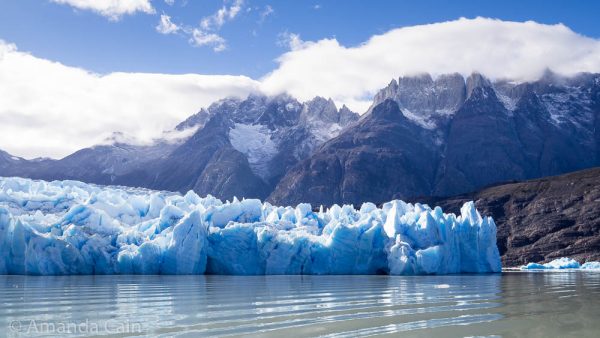
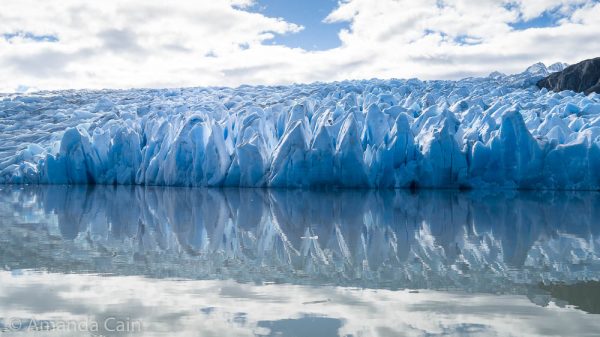
As we hiked next to Grey Lake we started to see big icebergs floating along. When we finally made it to the end of the lake we could see the wall of ice that was Grey Glacier. From here we got a ride in a catamaran where they took us up close to the front of the glacier. We were lucky with the weather because we had clear sunny skies. This also meant that the sun lit up the ice nicely and made it glow blue. Some of the icebergs were so blue that they looked fake.
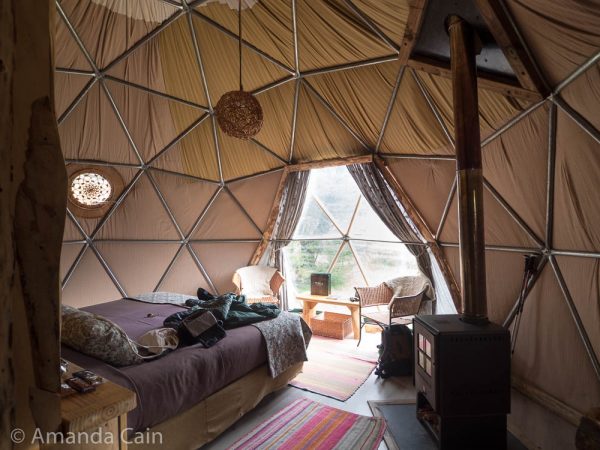
After our boat ride we got a mini van back to Eco Camp where we got to indulge in serious comfort. They have nice comfy domes to stay in with good reliable hot water. And the food there is super delicious. It’s the kind of food you’d get in a nice restaurant. So everyone was in a VERY good mood after they’d had a hot shower and good meal. We also had a wood stove in our dome. This time I was determined to prove that I could light a fire. Turns out that we both failed basic survival skills and only succeeded in burning half the cardboard, half the kindling and leaving a few black scorch marks on the actual logs. So once again we had to call in experts to light the fire for us. At least the park wasn’t in any danger of us burning it down.
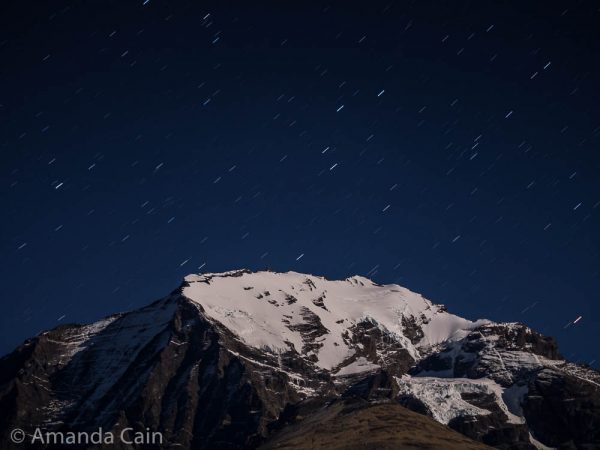
Day 4: Trek to the Towers – 24km, 11 hours
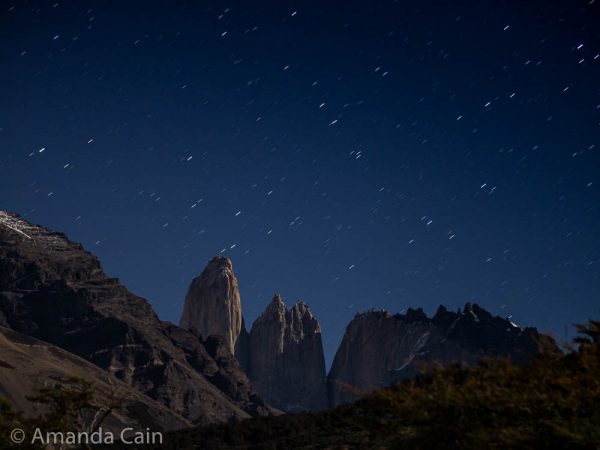
This was it. The final day, and we were going to climb up to the Towers (Torres) which give the park its name. We knew that this was going to be a tough day. Our guides had told us what to expect: 2 hours of uphill, 1 hour of flat in the forest, then another hour of super steep climbing. We were mentally prepared, and we had done whatever we could to minimise the injuries and blisters from the previous days. Now it was time to walk.
The first part was exactly what we were told; tiring but not difficult. When we got to the top of this section we had to make it through the “Windy Pass”. There was barely a breath of wind. I’m not sure how much attention you’ve paid to the photos, but we had clear sunny weather with no wind pretty much the whole time we were there. This is not normal for Torres del Paine. It’s famous for having four seasons in one day. For drowning people in rain then blowing them over (with their 20 kg backpacks) in 120 km/h winds. And this day was no different to the last three. We were VERY lucky with the weather.
Patagonian Flat
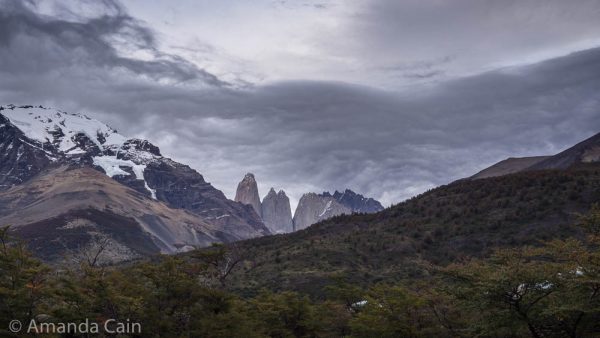
After the climb we were looking forward to the next flat easy walk through the forest. Turns out that was a bit of a lie. When our guides said “flat”, what they meant was “Patagonian flat”. This is when you go up 30 metres, then down 30 metres, then up 30 metres, then down 30 metres again. You slowly gain altitude, but not very much. So they call this “flat”.
The Towers
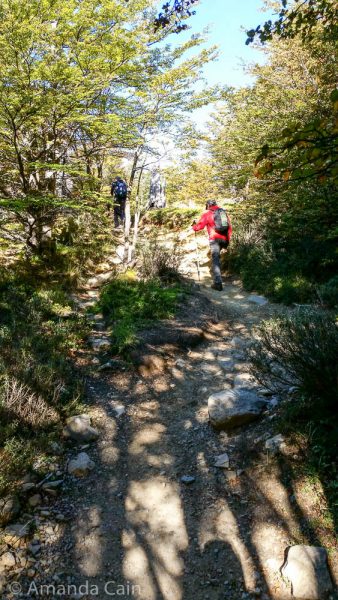
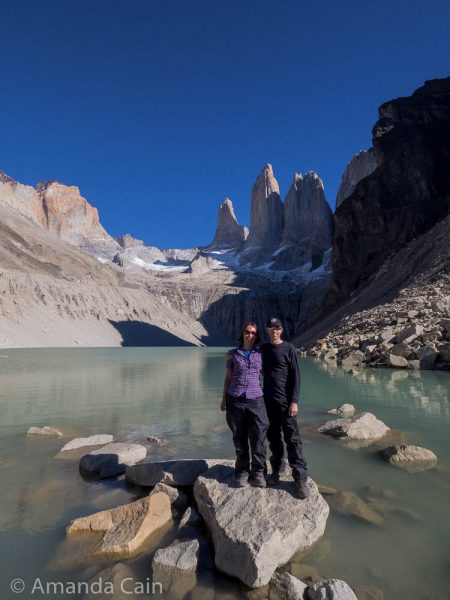
The final climb up to the towers is steep and tough, you gain 300m of altitude in 1000m of horizontal distance, so that’s a gradient of 27°. Most of the way up involves climbing up big rocks, sometimes you need to use your arms and legs because it’s too steep for trekking poles. But as you go up and look back at where you came from, you can see your progress which helps encourage you. So after an hour of sweating it out we finally made it to the top. There was plenty of cheering and yelling as our group finally made it to the lagoon at the top. We felt like champions. Like we had conquered the world. Or at least a tall hill.
The Way Down
I could finish the story here, where we felt strong and victorious. But getting to the top wasn’t the hardest part. The hardest part was actually the return trip back to camp. Not long after we began our trip back down the mountain Pedr got his foot caught between some rocks and twisted his knee, so by the time we made it to the bottom of the steep section he was in a fair bit of pain. Even my knees were sore and they weren’t injured.
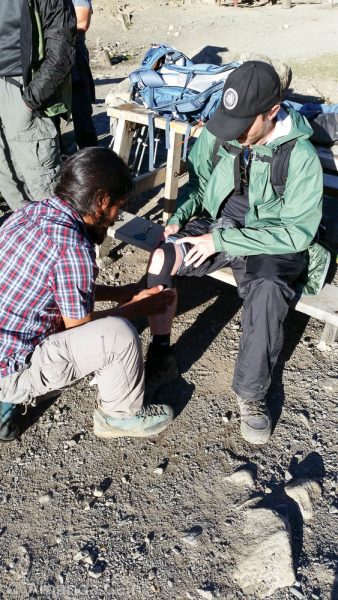
This last part of the descent was slow going. Both of us had sore knees and ankles, our feet were on fire and blistered. But slowly, bit by bit, we made our way down. We remembered that once we were at the bottom it was only a short walk back to camp. But that last flat section seemed to take forever. It probably took us twice as long as it did at the start of the day. As we pushed through the soreness and pain it didn’t seem like the camp got any closer, just more trees or bridges, or other things that we didn’t remember passing in the morning.
It was this last section here that really tested our resolve, we were seriously tempted to just stop and sit down and not move anymore. Especially with the temptation of getting a van to pick us up and drive us the rest of the way. But we kept going, and when we finally walked into camp we really felt like we could celebrate. NOW it felt like we properly victorious. We had completed the W. And of course that night was full of wine, pisco sours and calafate sours to celebrate our well-earned achievement.
The End
So that’s what it was like for us hiking the W in Torres del Paine. The good and the bad. We weren’t the strongest or fastest people in our group (we were actually the last to enter camp). But you really need to have a lot of mental strength to keep going. Especially when every rock looks like a good spot to sit down and give up. So even if you’re not that strong, as long as you’re determined you can get there in the end.
And to finish up… PENGUINS!
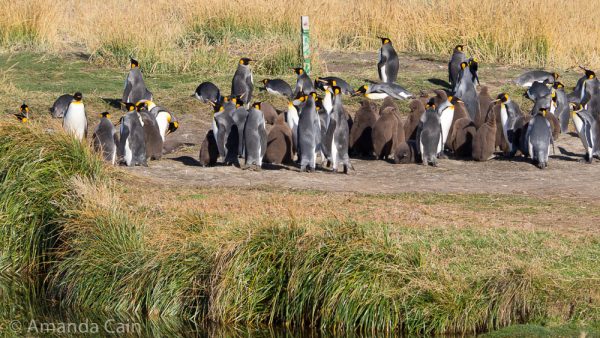
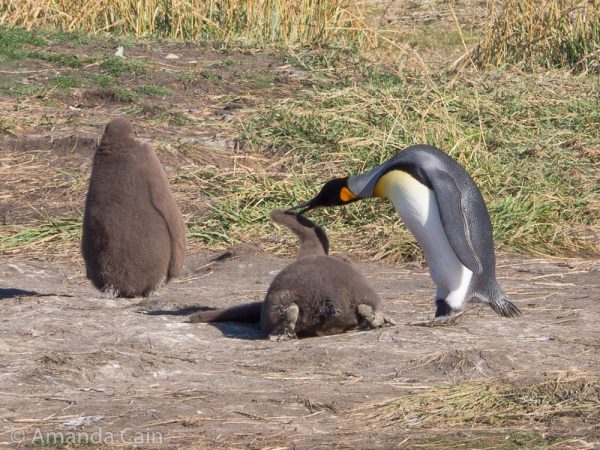
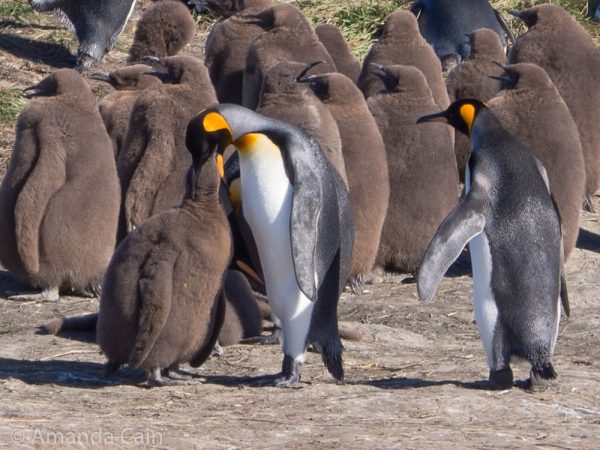
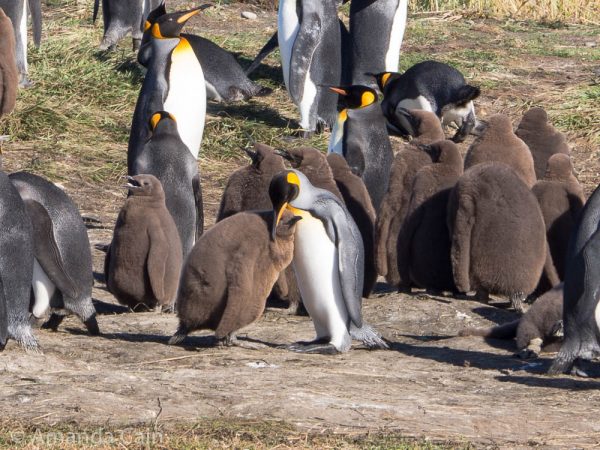
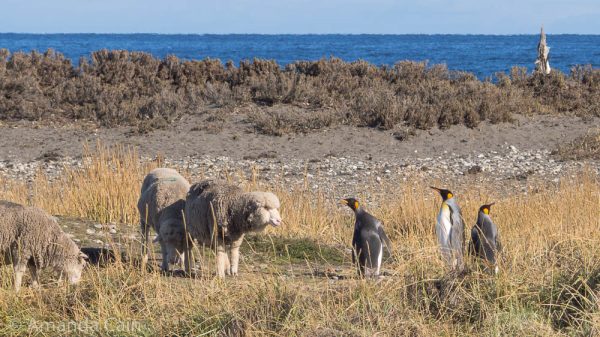
Because everyone loves penguins, here’s a few pictures from a colony of King Penguins in Tierra del Fuego, the southernmost tip of South America.

WOW..What an achievement. Something you guys will never forget or want to do again Always enjoy reading your blogs Amanda.
We were damn happy when we had finished it. We can’t say we’re not going to do something like that again, the Inca Trail isn’t too far away. We had one woman in our group that skipped the last day because of a bad knee, and she was going to do the Inca Trail only 3 weeks later. I hope she makes it.
What an awesome adventure. You guys did an amazing job. Photos are spectacular – and thank goodness, as it means I won’t ever need to endure that kind of torture! Rest up while you can.
Hahaha, you guys would probably go better than us. You do a hell of a lot more exercise than we do! 🙂
that is truly a lot of hardwork and effort, to continue with your treks, I would have just stopped and get the car and get picked up. A very well deserved and beautiful photos , you catched them well in your photos about nature. I hope Pedrs knee is better. A lot of sore feet .
Yes we were very sore for a few days afterwards. So now we are taking things a bit easier so we can recover.