• Skip to main content
  • Skip to primary sidebar
  • Skip to footer

Allons-y

Adventure travel for regular people

  • Blog
  • Adventures
  • Tips and Advice
  • Gallery
    • Landscapes Gallery
    • Animals Gallery
    • Cities Gallery
    • People Gallery
    • Croatia Gallery
    • France Gallery
    • Italy Gallery
    • Norway Gallery
    • Spain Gallery
    • UK Gallery
    • USA Gallery
  • About
Allons-y > Photo Journal > The Amazing and Incredible Galapagos Islands – Part 1

27 March, 2017 By Amanda

The Amazing and Incredible Galapagos Islands – Part 1

I’m going to stay it straight away. The Galapagos Islands are the most amazing and incredible place we have seen in our lives. We spent 8 days here cruising around the islands on a boat, which meant we got to visit some of the more distant islands. But even in the populated islands, and near ports there are still more animals than you’ll see in any other place.

What makes the Galapagos so special is that the animals are almost completely unafraid of people. Which means you can get really close to them, and they’ll happily continue going about their business. Now there is a rule that says you’re supposed to stay 2 metres away from the animals, but it’s sometimes impossible to follow. Like when birds build their nests right next to the marked walking path, or baby sea lions come up to you to sniff you. I’m not sure if I can describe the experience properly, so I’ll keep the words to a minimum and I hope the pictures can do a better job. Enjoy!

Day 1 – Santa Cruz

On our first day we were greeted at the airport by an iguana wandering around, and by another iguana, four sea lions, a heron and about 20 frigate birds that call the dock area home.
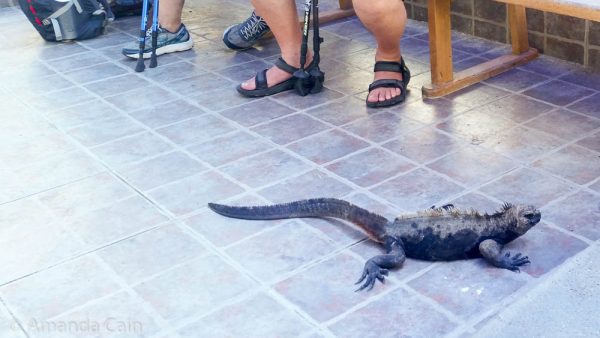
A picture of a marine iguana at a dock, surrounded by people.
This was what was waiting for us at the dock. He wasn’t bothered by all the people around him taking pictures.

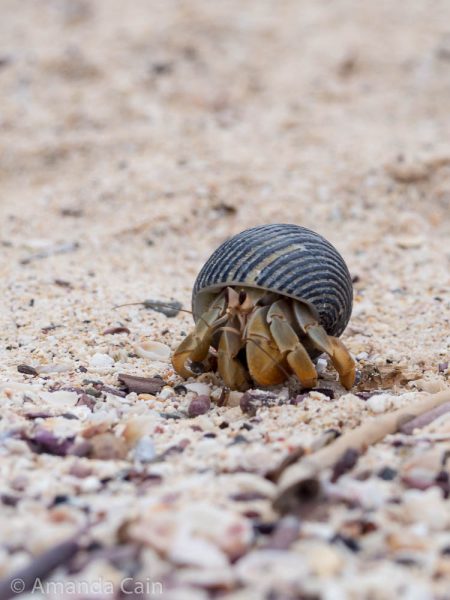
Once we got on board our boat we were off to a nearby beach for our first encounter with what the Galapagos had to offer. The beach walk was probably only 500m long but it was packed full of bright red crabs crawling all over the rocks, pelicans and boobies diving into the sea to catch fish, turtle nests packed together high up on the beach, as well as lots of baby sharks in the water trying to steal leftovers from the bigger animals.
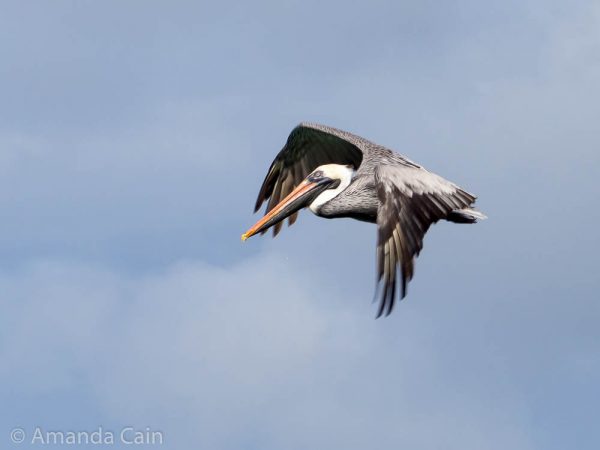
A picture of a Galapagos pelican in flight.
A Galapagos pelican in flight.
A picture of a teeny tiny hermit crab watching for danger.
A teeny tiny hermit crab watching for danger.
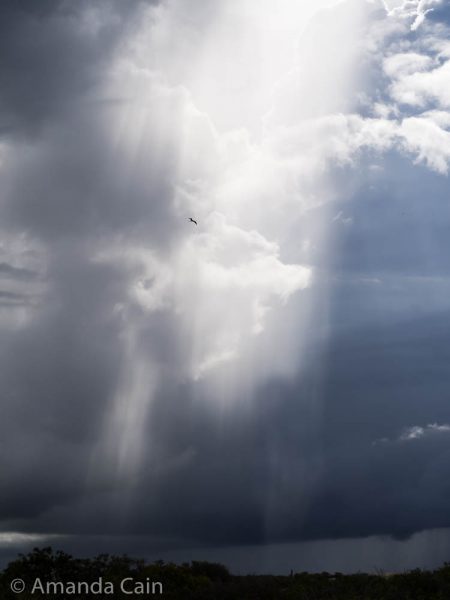
A picture of the sun's rays breaking through rain clouds.
Our first day in the Galapagos, and this is what we got for weather.

Day 2 – North Seymour & Bartolome

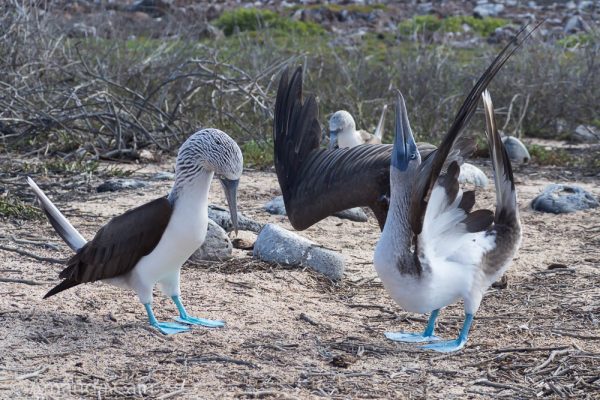
We were pretty amazed by all the animals we had seen on our first day, but it was nothing compared to what was waiting on North Seymour Island. This island is a bird paradise, where you have birds making their nests right next to the walking trail, or performing their mating dances right within touching distance of all the people watching and just generally not caring one bit about any of the people nearby. Even when we stepped off the boat onto the landing spot, the black rocky steps came to life as hundreds of black crabs scurried to the sides of the stairs.
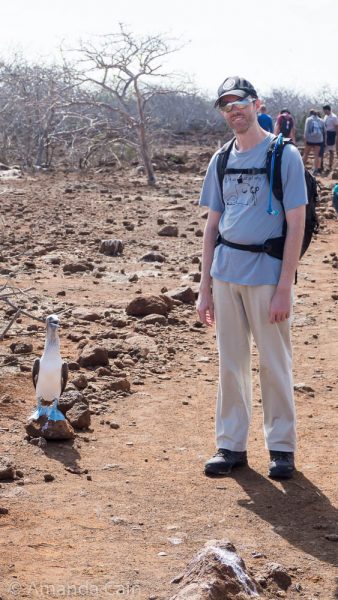
A picture of Pedr next to a blue footed booby.
The birds on North Seymour Island have no fear of humans, so they’ll happily stand right next to the path, and even make their nests there too.
A picture of a male and a female blue footed booby performing their mating dance.
A male and a female blue footed booby performing their mating dance. This dance also involves marching on the spot to show off their blue feet, and offering each other twigs, as well as stretching out their wings, necks and tails.
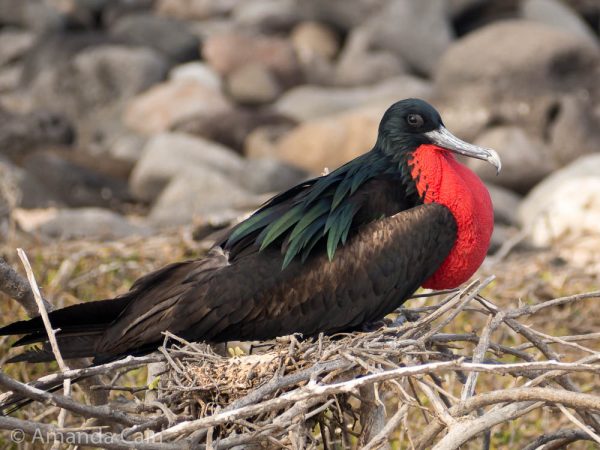
A picture of a male frigate bird sitting on a nest.
A male frigate bird sitting on a nest.
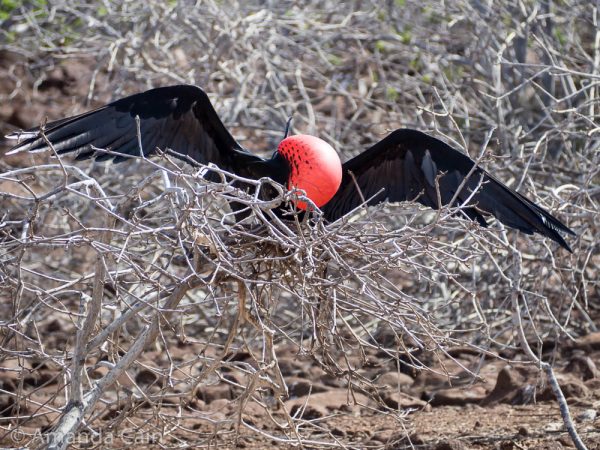
A picture of a male frigate bird trying to attract a female to his nest.
A male frigate bird trying to attract a female to his nest. It takes them a few hours to inflate their red throat pouches and they use this to attract females. Once he’s won over a female he deflates the pouch.
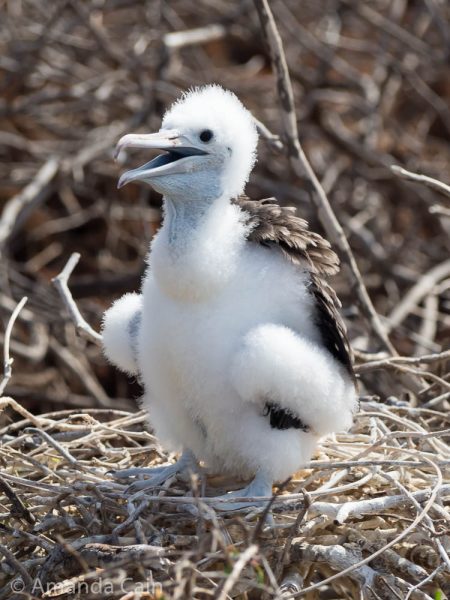
A picture of a baby frigate bird.
A baby frigate bird.
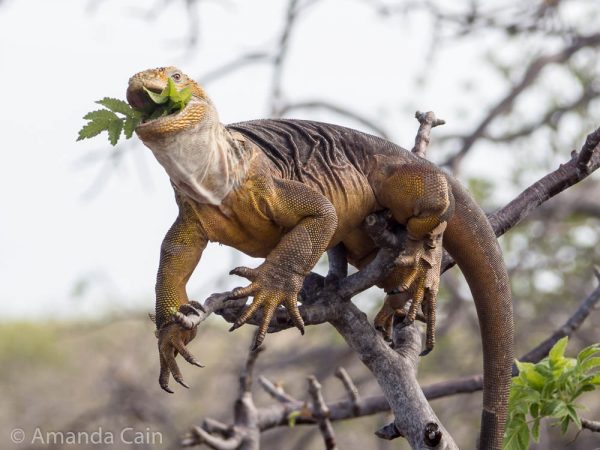
A picture of a yellow iguana up a tree to get some food.
A yellow iguana up a tree to get some food.

Bartolome Island is a pretty new piece of land. It’s so new that you can still see all the lava tubes, and no plants grow on the volcano yet because it’s too barren. But it does mean you get to see plenty of lava formations all over the island.
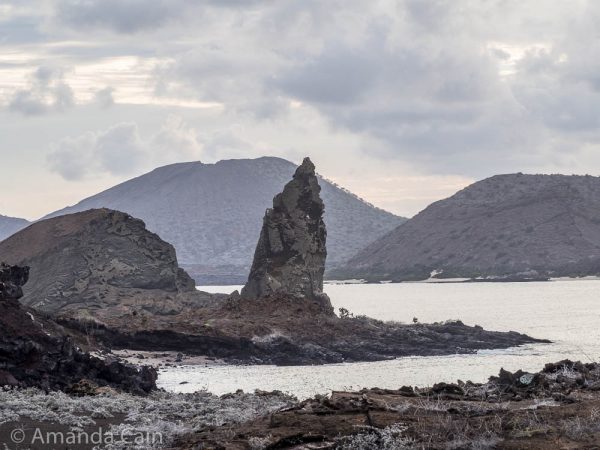
A picture of the Pinnacle of Bartolome Island
The Pinnacle of Bartolome Island. WWII pilots used it as target practice. Luckily it managed to survive.

Day 3 – San Salvador

San Salvador was another great day for animals, this time it was mainly sea lions. Best of all, since we were there at the right time of year, baby sea lions!
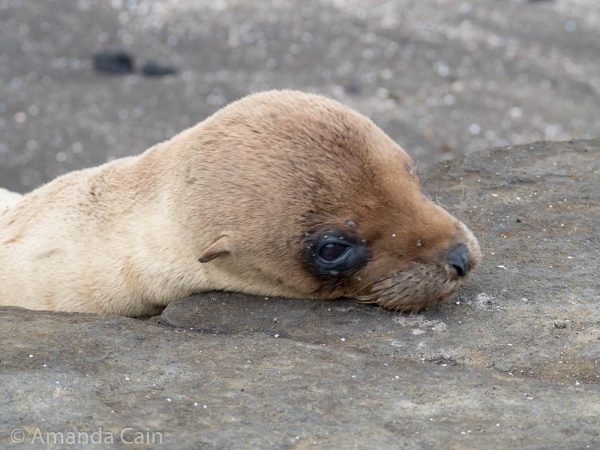
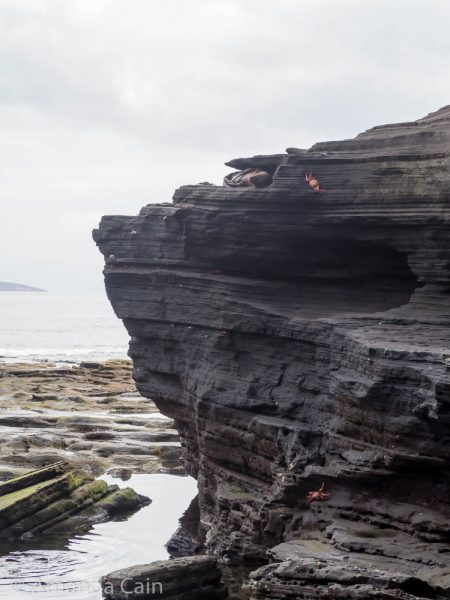
A picture of a baby sea lion waiting for its mother to come back.
A baby sea lion waiting for its mother to come back.
A picture of a baby sea lion asleep up a cliff.
If you look very closely at the top of the cliff you’ll see a baby sea lion curled up asleep. We have absolutely no idea how he got up there.
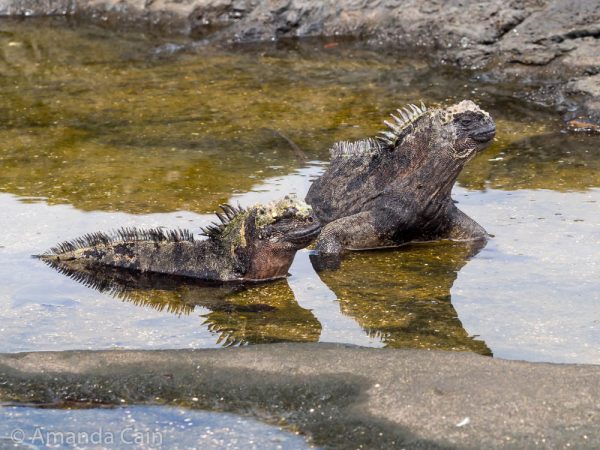
A picture of a couple of marine iguanas enjoying lazing around in a pool of water.
A couple of marine iguanas enjoying lazing around in a pool of water.
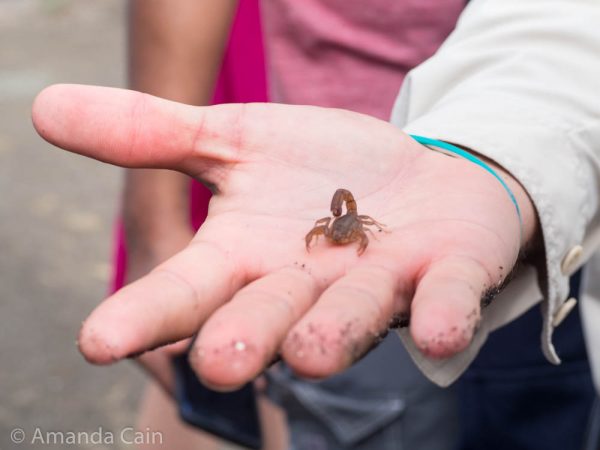
A picture of a teeny tiny Galapagos scorpion.
A teeny tiny Galapagos scorpion.
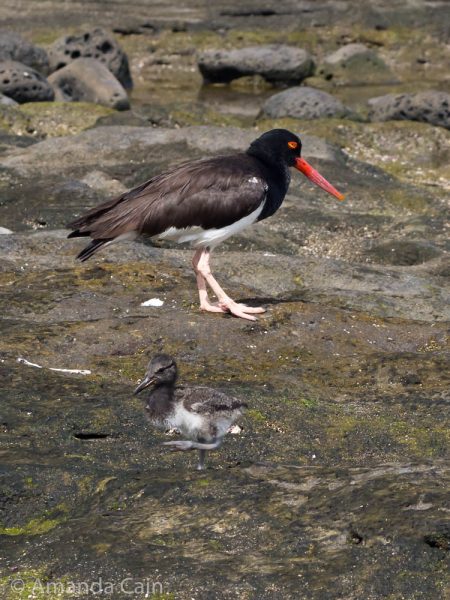
A picture of a baby oyster catcher with its mother.
Baby oyster catcher with its mother.
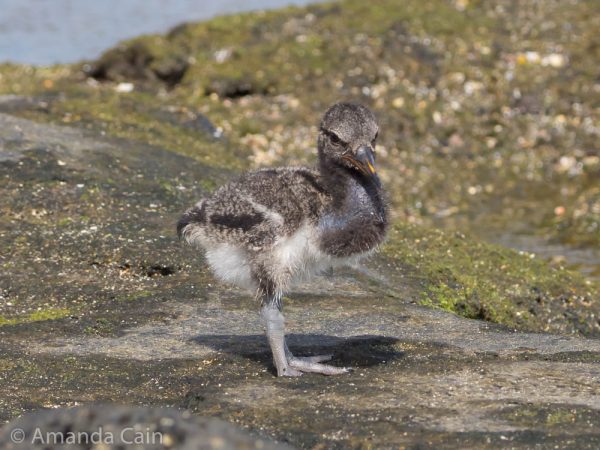
A picture of a very young and fluffy baby oyster catcher.
A very young and fluffy baby oyster catcher.
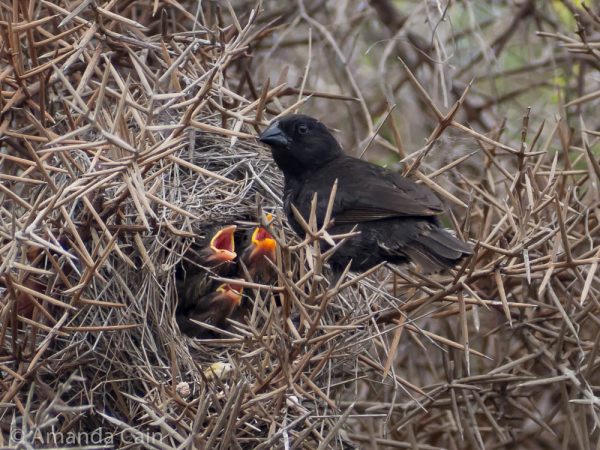
A picture of a finch bringing food to a nest of babies.
A finch bringing food to this nest of tiny babies.
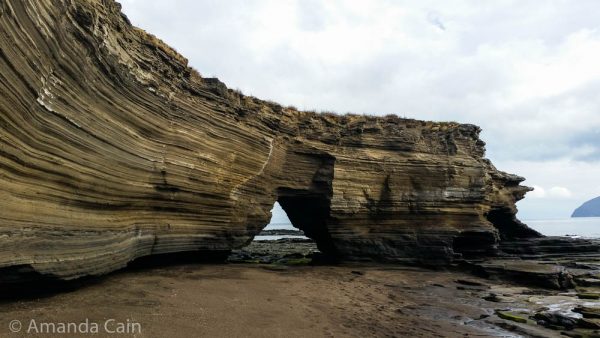
A picture of cliffs.
Some of the fantastic landscapes in the Galapagos.

Day 4 – Isabela & Fernandina

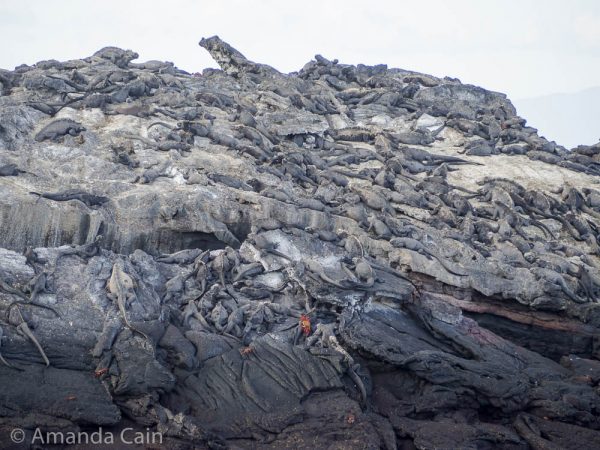
By day 4 we made it to one of the furthest of the Galapagos islands: Fernandina. This is where we saw the most marine iguanas in the one spot, as well as plenty more sea lions. There were so many iguanas here that you literally were tripping over them as you walked along the rocks. It didn’t help that they look just like the rocks they’re sitting on, and that they’re so lazy they won’t move when people come near. So you have to step over them to get around. I’m sure quite a few iguanas must get stepped on.

We also had a couple of playful sea lions here too. One was jumping in front of our inflatable zodiac like a dolphin and another one was playing fetch with himself in the water. He had a stick in his mouth and would put his head above the water to throw it, then race over to where it had landed and do it all over again.
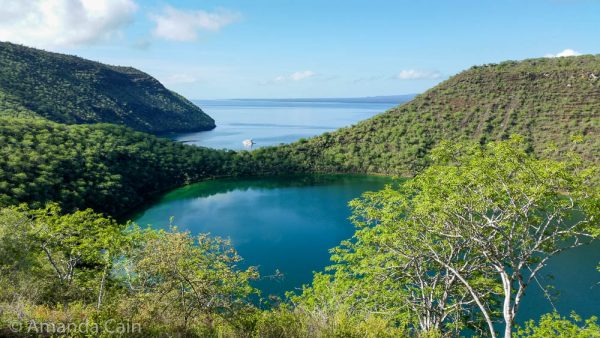
A picture of Darwin's Lagoon in the Galapagos.
Darwin’s Lagoon in the foreground, with our boat/home anchored in the sea outside.
A picture of hundreds of iguanas piled on top of a rock.
All the dark shapes you can see on this rock are iguanas piled on top of each other. Fernandina Island had the most iguanas by far out of all the places we saw.
A picture of a racer snake in the Galapagos.
A little racer snake, just like the ones from the Planet Earth II series chasing the iguana. This one was happy to sit still and pose for the camera.
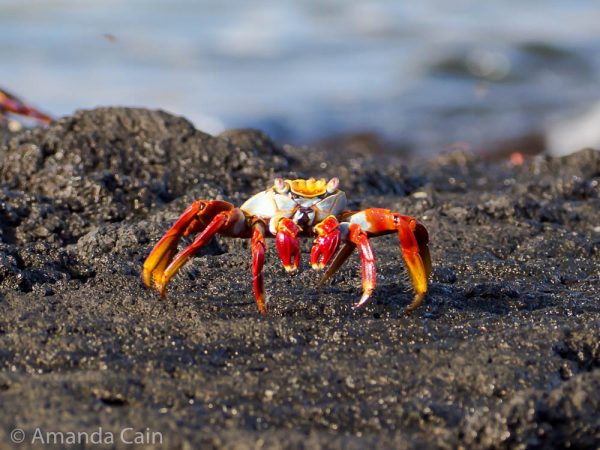
A picture of a brightly coloured crab from the Galapagos.
You see these crabs all over the Galapagos. I don’t know how so many of them can survive seeing as they’re so brightly coloured.
A picture of lava formations in the Galapagos.
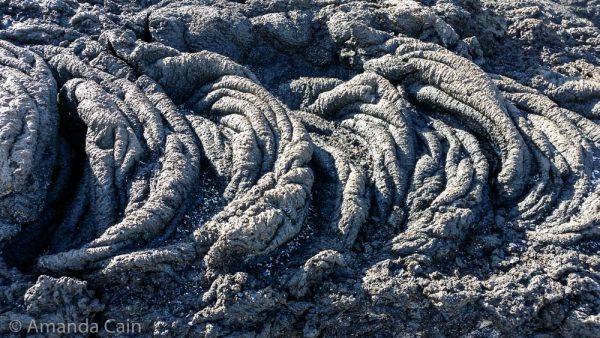
All over the Galapagos you get these weird lava formations. Some look like twisted bits of rope, others look like the ground has been smashed into little pieces by a giant. Every island is different.

This has been a little taster of the first half of our Galapagos trip. It was really hard to whittle the photos down to just enough to fit into a blog post. In the first 4 days I took about 750 photos, got it down to 340 keepers, down to a shortlist of 49 for this post, and eventually down to 26 that actually made it. That should give you an idea of how many amazing things you can see when you go to the Galapagos.

For Part 2 of our trip in the Galapagos click here.
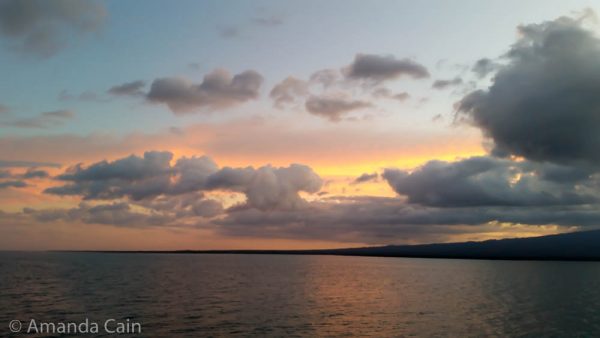
A picture of a sunset in the Galapagos.
You get some amazing sunsets in the Galapagos. This evening the clouds looked like they were glowing orange, pink and yellow.
The Amazing and Incredible Galapagos Islands – Part 2
Back on the Road - First Stop: USA

Related

Filed Under: Photo Journal, Travel Updates Tagged With: Adventure Travel, Animals, Ecuador, Galapagos, Nature

Reader Interactions

Comments

  1. Rheannon says

    8 February, 2018 at 7:37 am

    I love all the photos you include in this blog! Great work!

    Reply
    • Amanda says

      8 February, 2018 at 11:31 am

      Thanks a lot Rheannon! 🙂

Leave a Reply Cancel reply

Your email address will not be published. Required fields are marked *

This site uses Akismet to reduce spam. Learn how your comment data is processed.

Primary Sidebar

Search

This error message is only visible to WordPress admins

Error: No connected account.

Please go to the Instagram Feed settings page to connect an account.

Recent Posts

  • Ferrara – An Underappreciated Gem
  • Want to See Epic Mountain Scenery? Go to the Dolomites!
  • Florence for Pedr’s Fortieth Birthday
  • The Highlands of Guatemala
  • That Time We Thought We Were Going to Die in Guatemala

Categories

Archives

Footer

Contact Us
Archives

About

Hi, we're Amanda and Pedr and we think that you don't need to be an athlete or look like a fitness model to be able to enjoy adventurous activities. We're just two regular people who don't fit the young / beautiful / athletic traveller mould, but we're still doing all sorts of adventurous things. Read More

Copyright © 2026 Amanda Cain · Log in