After so much time in Argentina we finally made it up north and into Bolivia. Crossing the border was pretty easy, no scams or dodgy officials. But getting on to the train to take us away was a chaotic scene with hundreds of Bolivian women (carrying their bodyweight in fruit & veg on their backs) trying to get on the train and find space for all their stuff. But we all fit, and a dusty 3 hours later we were in the southern town of Tupiza.
Tupiza
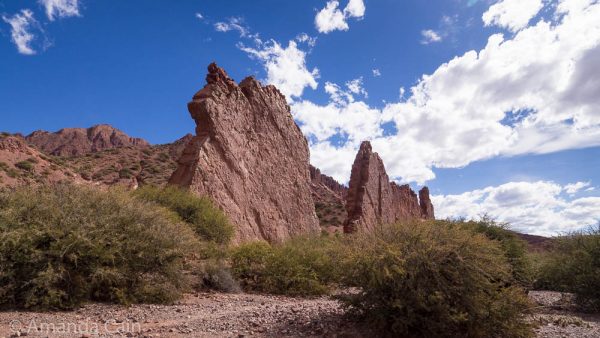
We spent a couple of days here to adjust to the altitude before starting on our salt flats tour. Luckily the area has some great canyons full of rock formations to explore, so you’re not just sitting around doing nothing the whole time.
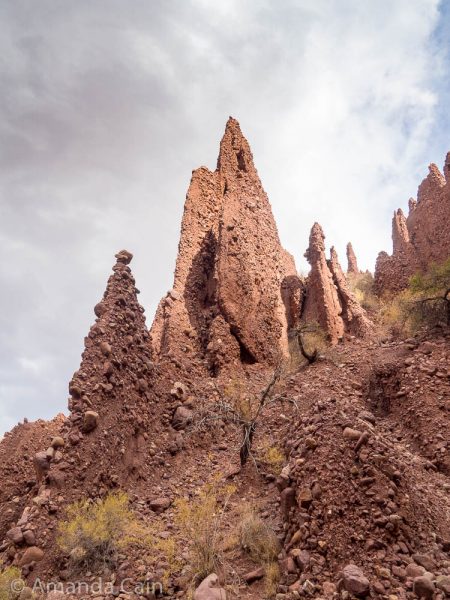
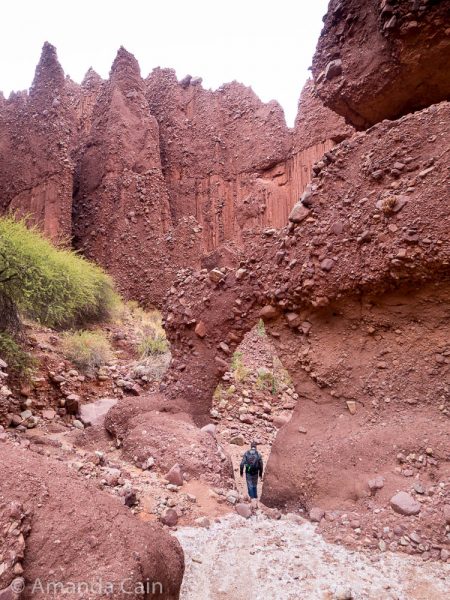
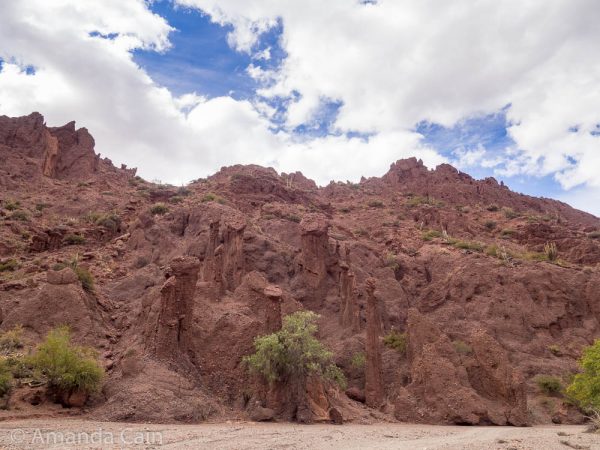
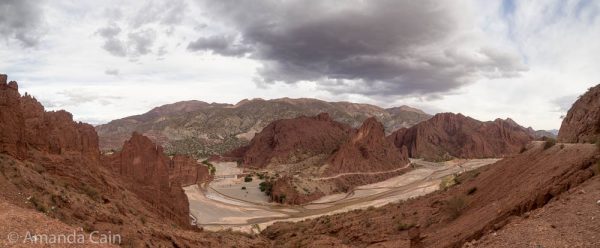
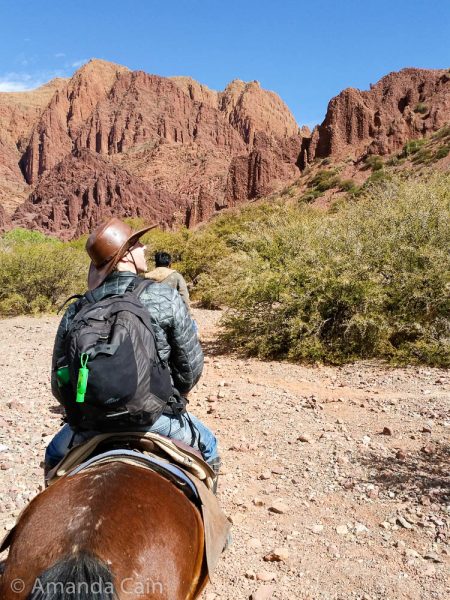
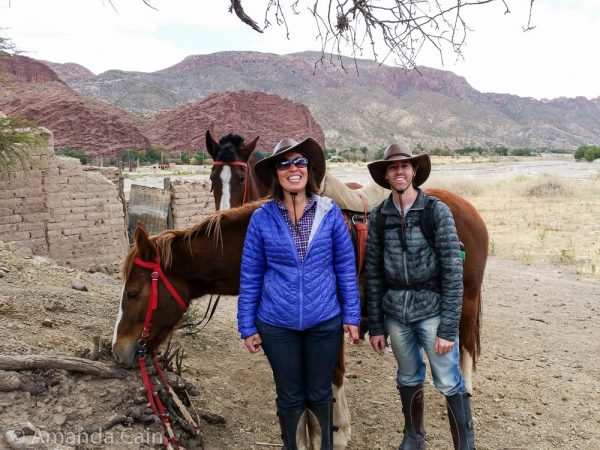
You can go horse riding through the canyons, and it really feels a lot like you’re in a Wild West movie. And they even give you cowboy hats to wear to complete the look. Although I think the puffy jackets we wore kinda broke the look a bit.
After three days of acclimatising we were ready to go, but the weather in the national park was pretty bad. Lots of snow and wind. So we waited another two days before finding out that the entire park was closed because of a freak snowstorm. Our guide told us that the week before he had been digging a path through deep snow for his 4WD. So he didn’t think we were going anywhere soon. We decided that we should move on to our next stop and try to come back for the tour later.
Blockade
Our next stop was Potosi, which should have been a 4 hour trip from Tupiza. The problem was that the people in the Tupiza area were protesting delays in repairing the water supply to houses in the area. Some places had been without water for months, so the people were pretty pissed off. When Bolivians are pissed off and want to protest, they blockade major highways. This means putting big boulders, branches, car engines, big piles of dirt and whatever else they can find on the road so that no vehicles can get through. So we had to hike several kilometres with our bags to get to the front line of the blockade. Then hike several more kilometres to try and find a minbus/van on the other side of the blockade to take us to Potosi.
The highway that runs through Tupiza is the main route to Argentina. So they had a LOT of trucks, buses and other traffic backed up for many more kilometres on the other side of the blockade. We eventually found a van, and when it finally had enough passengers we set off at high speed down the highway. But were stopped half an hour later by a road accident that had closed the highway.
So we sat around for an hour waiting for the road to open. But when it did we had to follow the police car which was going pretty slow. Our driver was not a patient man and started overtaking cars and trucks when there wasn’t enough space on either side of the road. This part of the trip was just constant honking from the oncoming traffic and the trucks that he cut in front of to avoid a head on collision. Once we made it out of the convoy our crazy driver decided to scare us even more by driving even faster and crazier to make up for all the lost time. This was probably one of the scariest trips we’ve been on. Drivers in Bolivia are absolutely insane.
Potosi
We finally made it to Potosi eight hours later in one piece (barely). And our maniac driver dropped us off at the bottom of the hill rather than the central area which meant we had to walk with all our bags up to the centre of town. The whole way up the hill we had to keep stopping because we were out of breath. We thought we were out of shape. But we didn’t realise until we arrived at our hostel that Potosi is one of the highest cities in the world; 4100m above sea level. At this altitude there is a bit over half of the oxygen available at sea level. No wonder it was so damn tough!
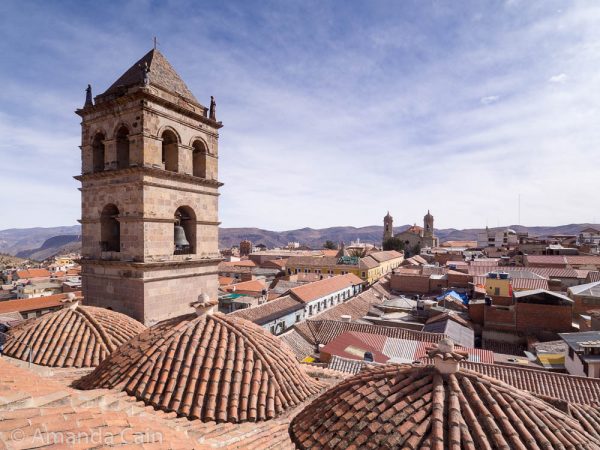
Potosi is famous for being one of the richest cities in South America because of all the silver the Spanish took from the mountain nearby.
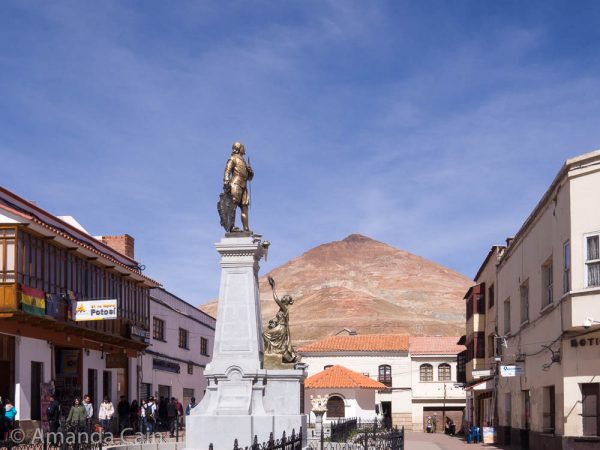
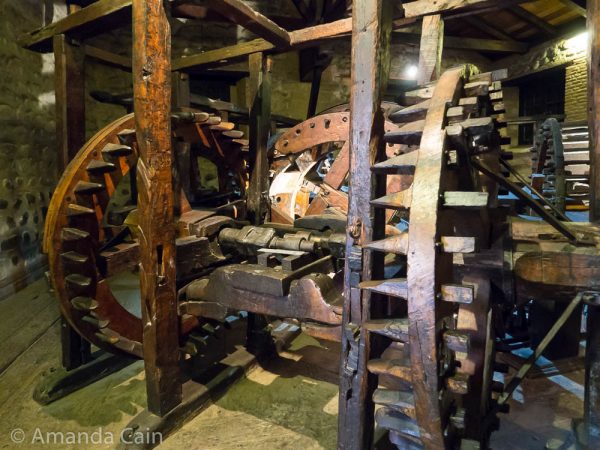
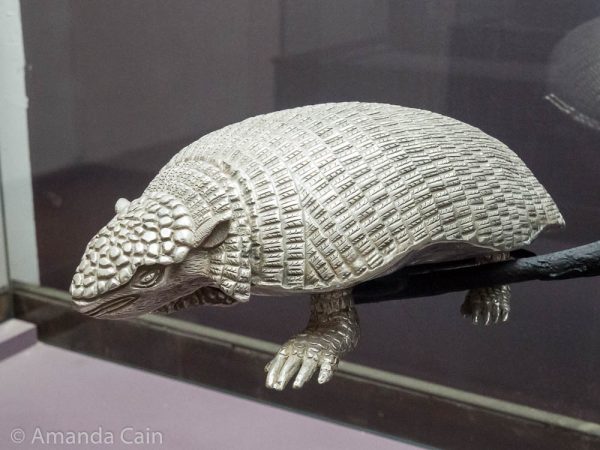
One of the stranger tourist attractions in Potosi is to go on a mine tour to watch the miners working in medieval conditions digging out whatever scraps of silver are still there. We decided that gawking at miners working in awful conditions wasn’t the kind of thing we wanted to do so we didn’t go. It’s also pretty dangerous, with mine collapses and asbestos. So you’d have to be pretty mad to want to go in there for fun. Instead we wandered around the historical part of the city and you can go to the old mint where they still have all the equipment they used to make coins from the very beginning up to modern times.
Sucre
Sucre was the next stop on our trip, and we really liked it. It has a nice vibe and even looks like it could be a town in Spain (apart from the insane traffic). It’s full of white colonial buildings and terracotta roofs, just like in Andalucia.
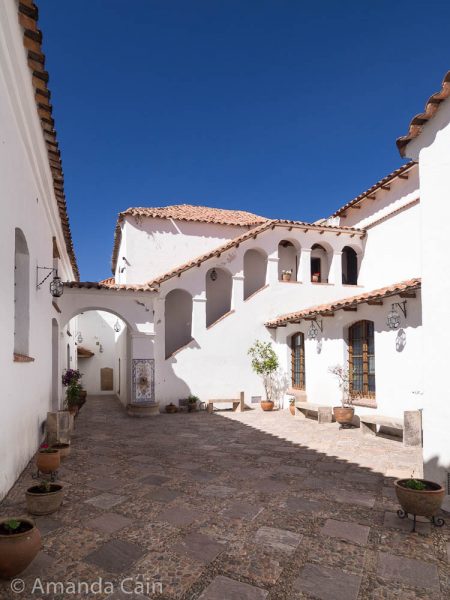
Sucre doesn’t have many big-name attractions, but it’s just a nice place to relax and enjoy the Spanish architecture as well as the good food. Here’s a trivia fact for you: Sucre is technically the capital of Boliva not La Paz (but they share government responsibilities so they’re more like co-capitals).
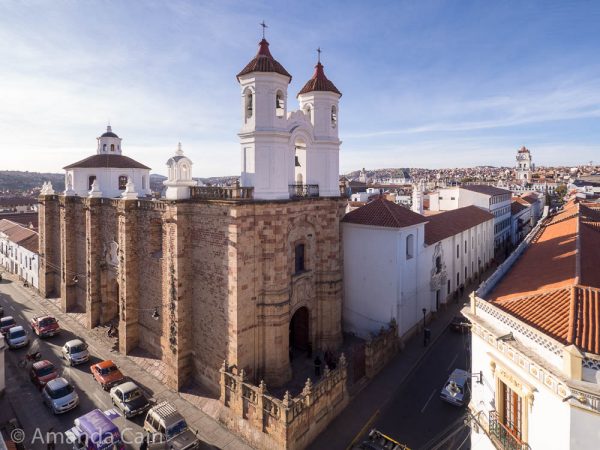
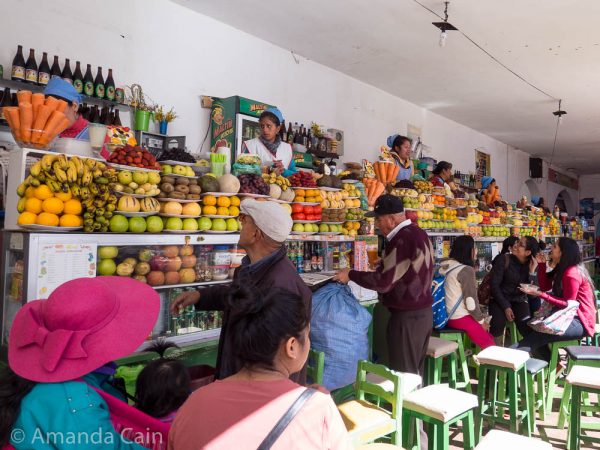
Chilling out in Sucre was a nice change after the stress of trying to get to Potosi. If you want to travel through Bolivia, you really need to have flexible plans. And be prepared to change or abandon them in case of weather or blockades. But I suppose this is part of what makes Bolivia, Bolivia.

Really interesting, you have to be really fit to undertake such enormous activity. It looks like wild west, and rough country, but that is the attraction of the place, it looks metallic spikes of mountain ranges. You can understand why people have a hard, ardous life, the environment is dry with hardly any plants. You are learning well to have an insight into how different people live in that environment and culture, adaptability is what they have learned to apply in daily life.
Love to you both,
Mum
You don’t have to be too fit, the horses do all the hard work. You just have to make sure you don’t fall off. Or try not to get bitten, my horse liked to bite everyone.