For this leg of our trip we visited south-western England and saw things from different eras with the oldest being Stonehenge. The monument is about 4000 years old and, not surprisingly, VERY popular. Back in Victorian times (about 150 years ago) they used to think that Stonehenge was one of the few buildings that survived Noah’s flood from the bible.
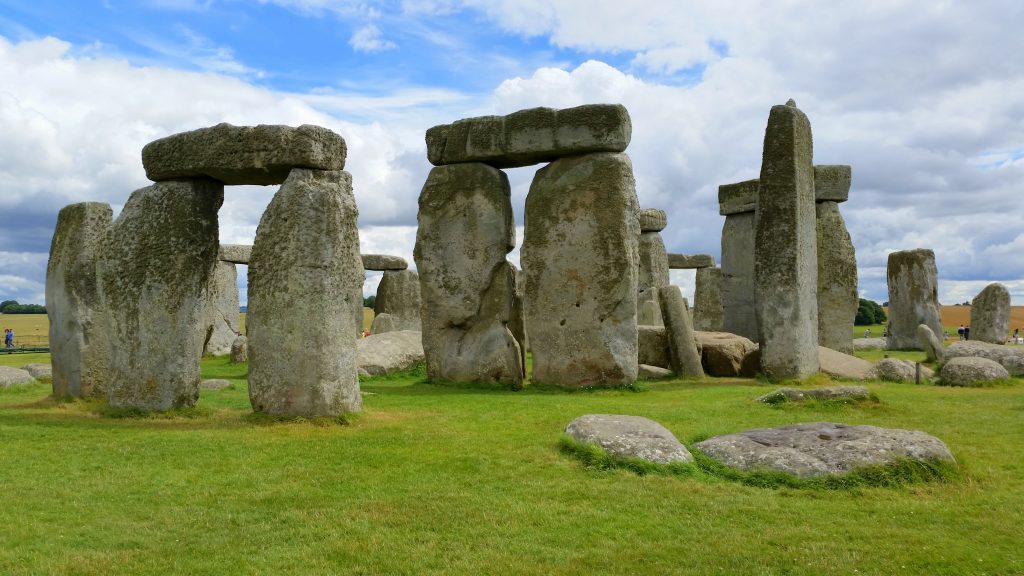
Nowadays they know a bit more about it but it’s still not that much. They know that it’s aligned with the sun, but they’re not sure if it’s supposed to line up with the winter solstice or the summer solstice. So there’s lots of different theories floating around about why it was built and what it was used for. As an extra bonus, we were there while a druid priestess was in the museum. She was camped out next to the scientific archaeological displays about Stonehenge and was getting people to see into their past lives while holding onto a magical staff. I’m not sure if she’s normally there but it was an interesting addition to the museum.
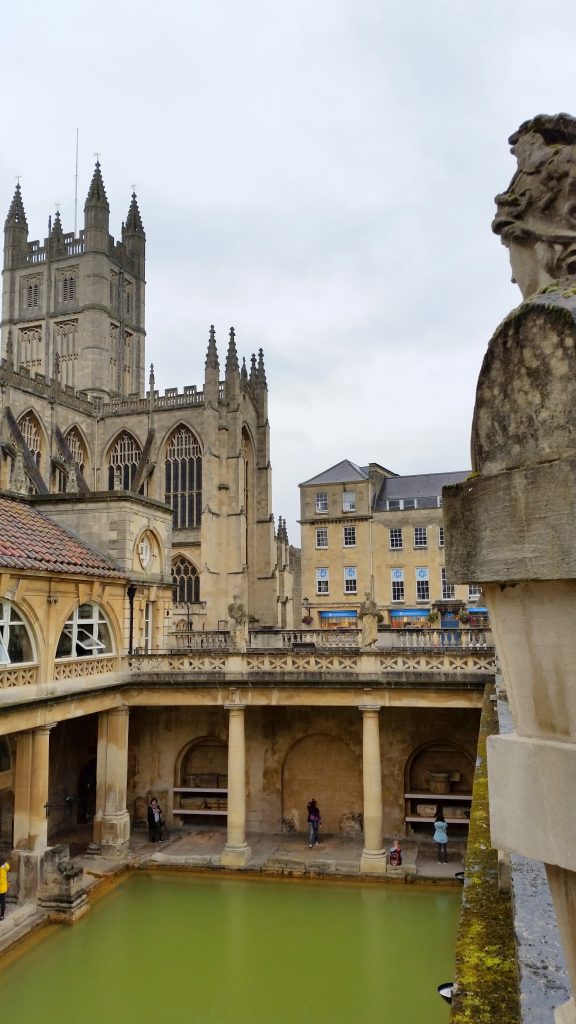
Bath is the site of the only hot springs in the UK so it was worshipped as a sacred site from a long time ago. It’s not too much of a surprise seeing as it’s pretty cold and miserable for most of the year. When the Romans turned up in the UK they decided to build a huge bath/temple on top of the springs and people came from as far away as Syria to be cured by the magic hot water. Other things they did was to throw engraved lead tablets into the sacred spring asking the goddess for justice because someone had stolen something from them. But they were so petty; most of them wanted the thief to die or be blinded or never to sleep again just because someone had stolen their bathing clothes.

Even in more modern Victorian times people still believed that the waters of the hot spring had healing powers and even recommended that people drink 5L a day of it to cure them. The water is full of minerals and you can even drink the fresh water from the spring to see how it tastes. Spoiler alert: it’s pretty awful. They have a water analysis at the drinking fountain where you can see how much of various elements and minerals are in the water, and being a water engineer I decided to compare it to the Australian Drinking Water Guidelines. Surprisingly there’s only one element, fluoride, that exceeds health limits. But plenty of others exceed the taste limits in the guidelines such as iron, sulfate and total salt content. So the water has a strong metallic tang from the iron and the sulfate content is nearly 4 times the level that would make you throw up. So I’m not sure just how much healing you would get from drinking 5L of this stuff.
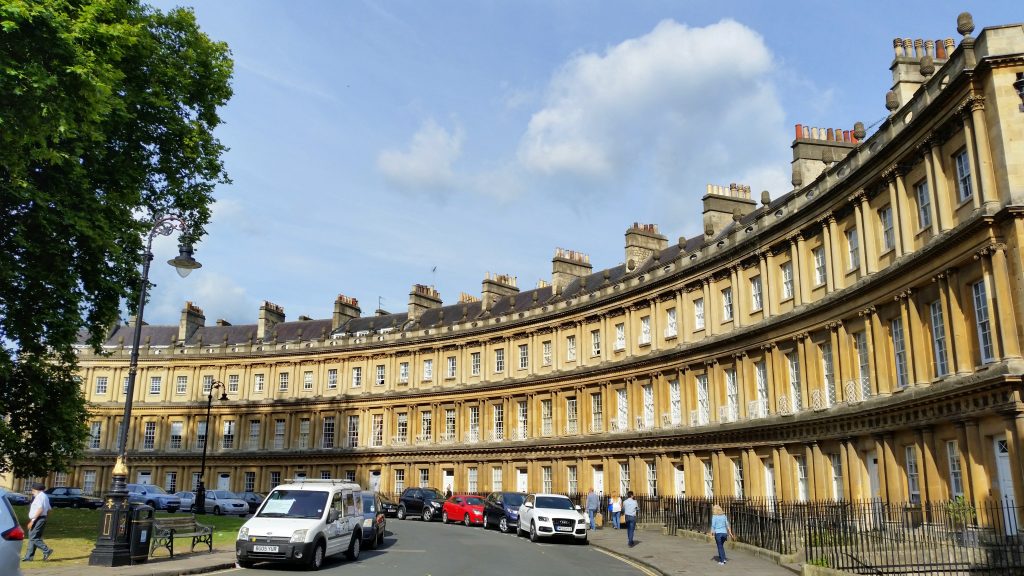
Bath town also had a big renovation in Victorian times so you get lots of nice, very Englishy looking buildings like the one in the picture above. This makes it a nice place for a stroll if it’s not raining.
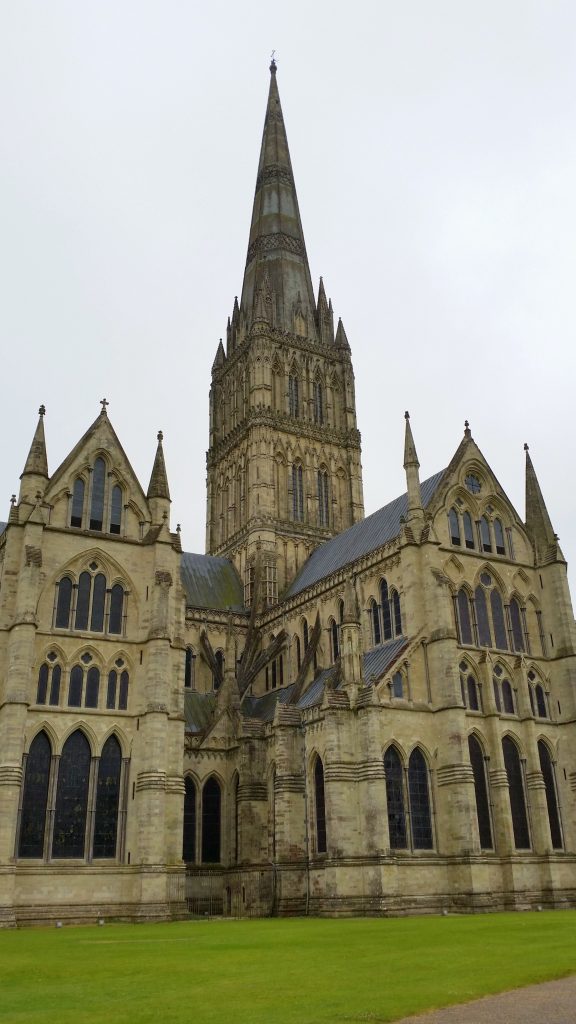
And now we go back in time a bit to Salisbury which was an important medieval town. Now it has one of the 4 remaining originals of the Magna Carta which is where modern English law comes from. You can go see it up close, it’s about the size of an A3 page with tiny font but it had all the laws they needed. The cathedral also managed to survive the World War II bombings because the German bombers used it as a landmark to make sure they were going the right way, and had strict orders not to destroy it because of this.
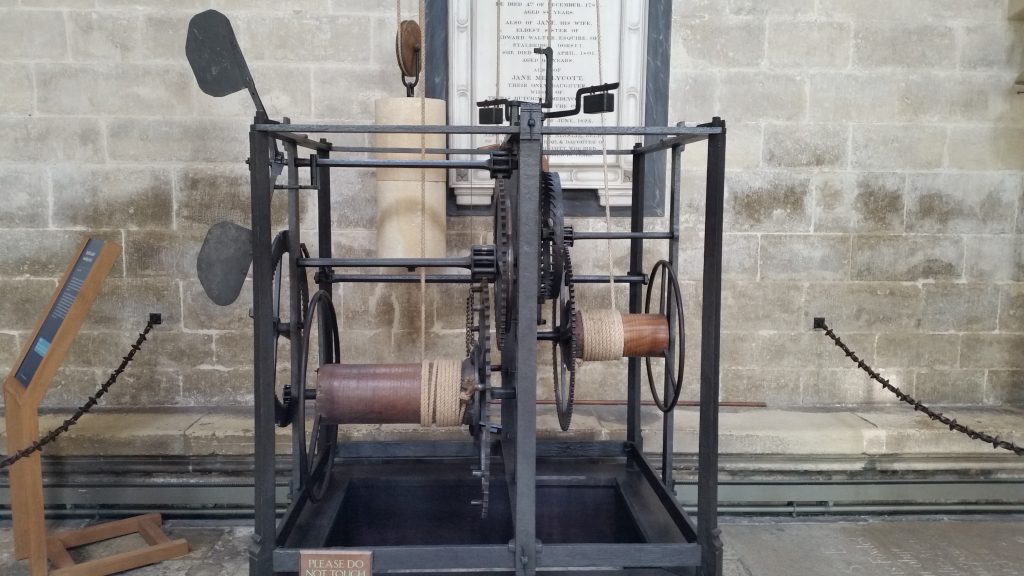
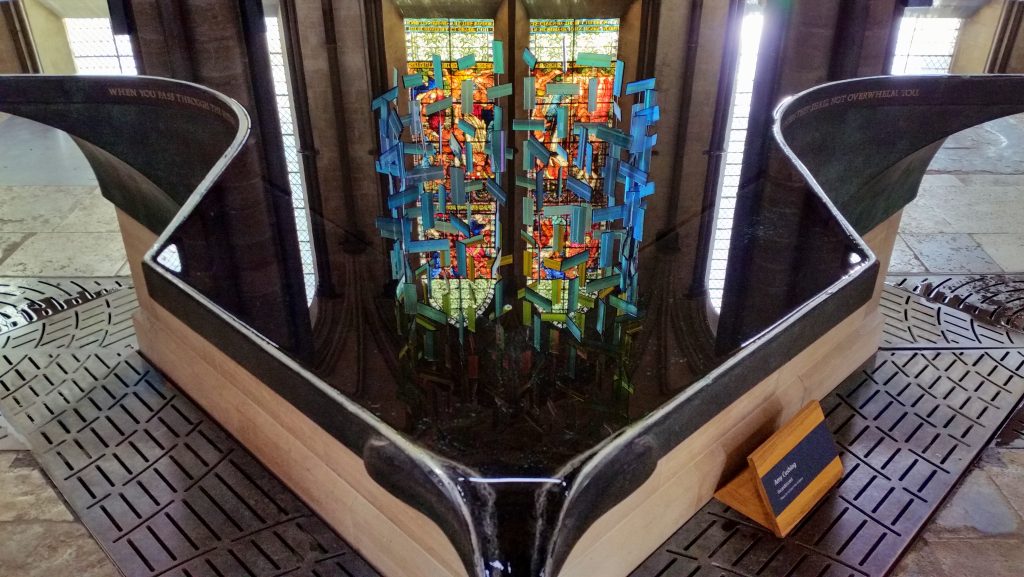
They also have the world’s oldest working clock in the cathedral which was interesting to watch it and try and figure out how it worked with all the wheels and cogs spinning away. They also have a beautiful baptismal font which turns into a perfect mirror. Our guide said he saw a woman put her handbag into the water because she thought it was made of marble.
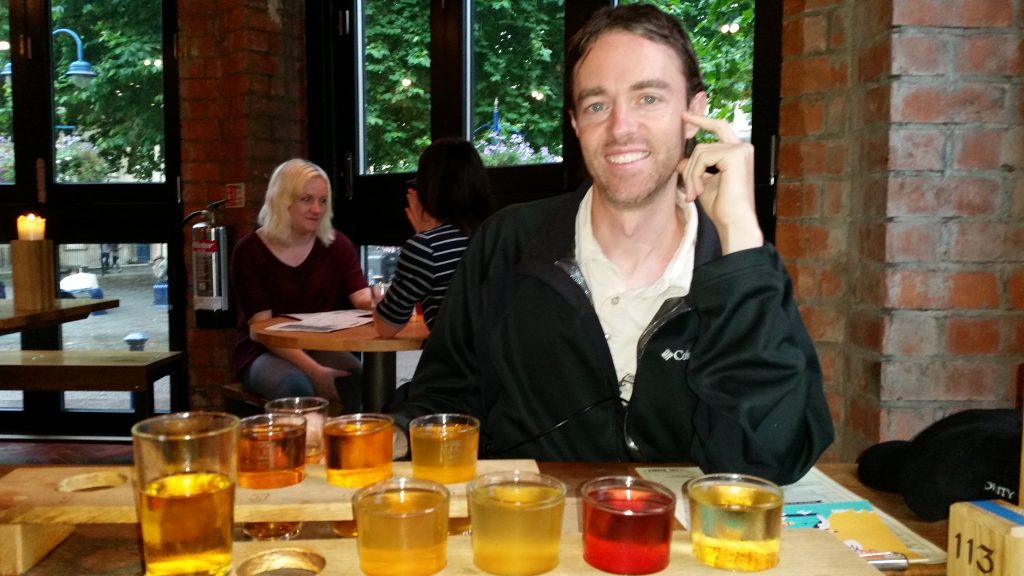
Salisbury and Bath are nice towns to go for a stroll with a nice vibe to them. When we were in Salisbury we stayed in an old pub where the ceiling and all the timber beams were bowed and warped, and it turns out that Bath has the best cider pub we’ve found so far. Over 80 varieties of cider! We didn’t get to try them all so we’ll have to go back some time…

With regards to the water, that could be a different composition now and a long time ago , so maybe cleaner before with less chemicals and elements so the taste or water components are less contaminated , what do you say Amanda? You are expanding knowledge which is a way to go.
Is that Pedr with drinkable water or wines? Would not try any , looks like a lot of chemicals.
Love,
mum
I don’t think it’s changed too much in the last 200 years because the bad taste of the water is mentioned in a book from the 1800’s. Nothing wrong with what Pedr is drinking, it’s all cider!