Not long after our arrival in Cusco for Inti Raymi (Festival of the Sun) we set off east, down from the Andes and into the lowland jungle of Peru. We were headed for the Manu National Park. A remote part of the Amazon Rainforest which has the highest biodiversity in the world. It’s so remote that it takes two days to reach the reserved zone in the heart of the park. And there are even uncontacted tribes living in the area. Because it’s so hard to get to, there hasn’t been any logging or mining in the area and only a handful of human settlements. So it’s a very pristine environment. And we had a whole week to explore and look for exotic and elusive animals like: jaguars, tapirs, monkeys, caimans, macaws, toucans and giant otters.
Day 1 – The Cloud Forest
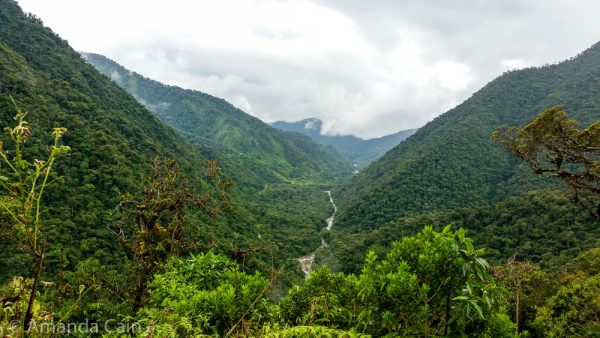
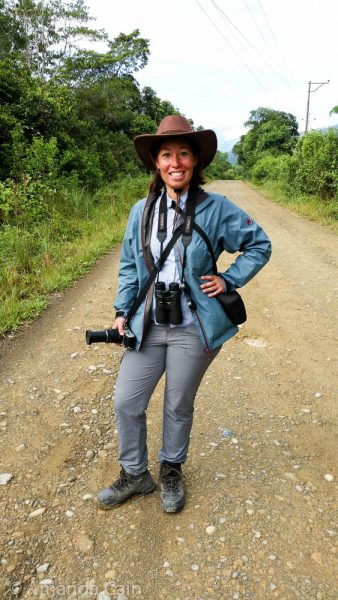
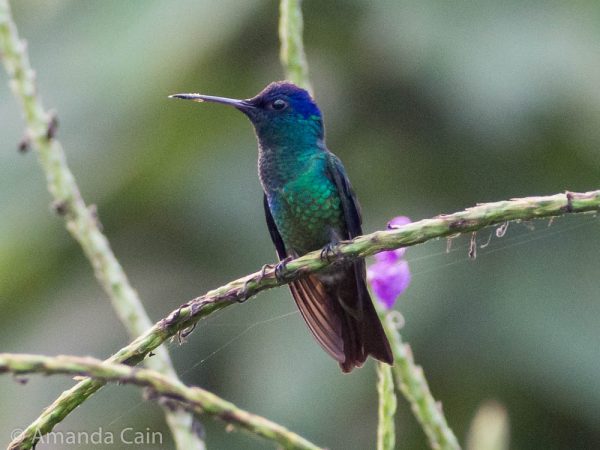
On our first day we were up at 4:00am and pretty much spent the whole day in a van, driving from Cusco down to the cloud forest in the lower section of the Andes Mountains. Luckily the area we were driving through was scenic. With tall steep mountains covered in greenery, and misty clouds gently drifting in and out. And we got to stop regularly to look for birds along the way. Our guide Juanjo was an expert bird spotter. He’d get the driver to stop the van because he’d seen a hummingbird further down the road. Without binoculars. By the time we’d fiddled around with our binoculars and were vaguely pointing them in the right direction the hummingbird had long gone.
The Cock Of The Rock
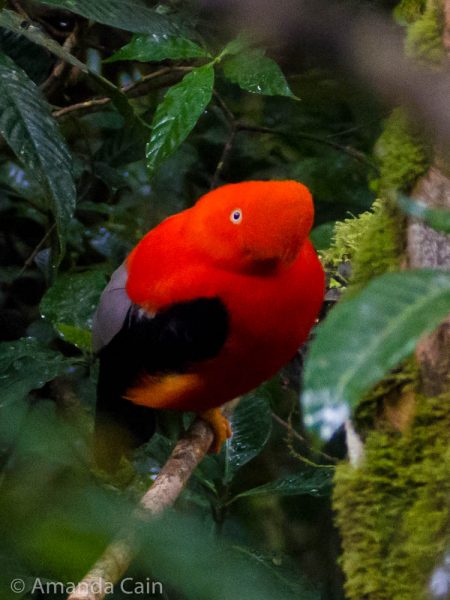
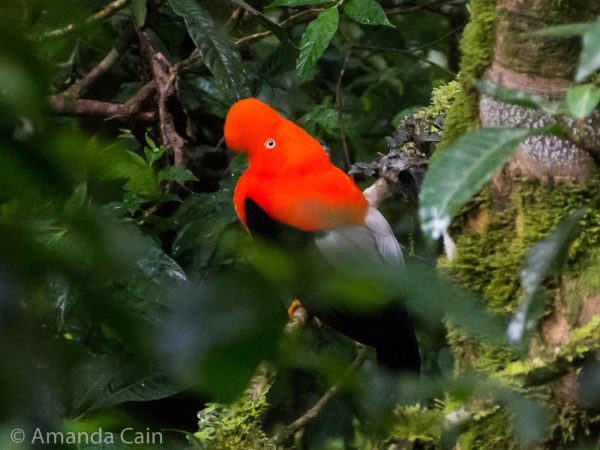
The highlight of this day was a stop to see Peru’s national bird, the cock of the rock. The males spend most of their time practising and perfecting their dance moves so that they can impress the females. We didn’t get to see much dancing when we were there because there was a hawk nearby looking for a meal so the cocks of the rock sat still. But they’re so brightly coloured that I’m surprised that the hawk didn’t see them anyway.
Day 2 – Down The Madre De Dios River
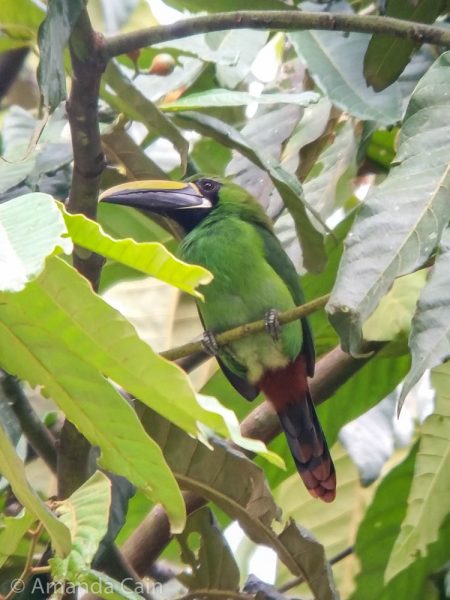
On our second day we took a walk in the area around our lodge, which was full of hummingbirds and even toucans and macaws. It was starting to feel more jungle-like.
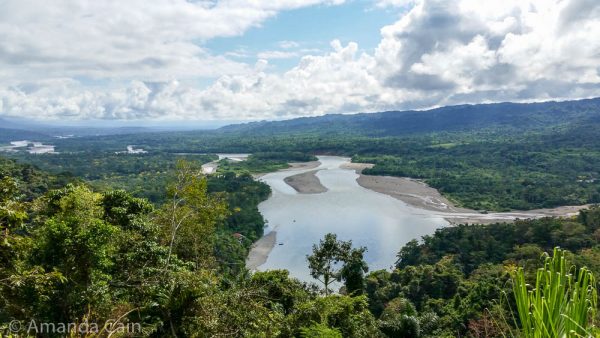
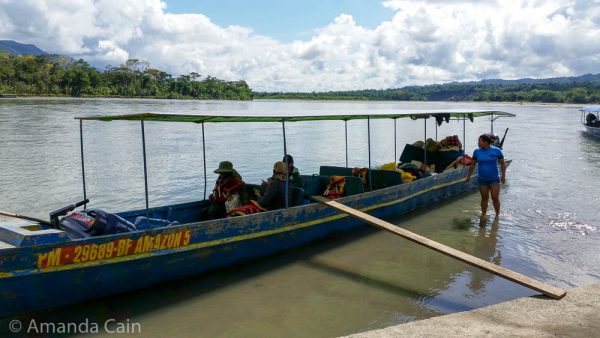
After our morning walk it was time to get on a boat. There are no roads once the river gets wide enough for boats. From this point, all our travel in the jungle was by boat or on foot. We took everything with us: food, water, gas, even our own cook. It was a long way to our next overnight stop. We must’ve spent 7 or 8 hours in the boat, going downstream. It gives you a good idea of how big this protected section of jungle is.
The Uncontacted People
As we went downstream our guide Juanjo told us about the uncontacted people living in the jungle. There were a few nomadic tribes that recently moved into the area along the left bank. Because they haven’t been contacted by the modern world, it is illegal to interact with them. (And dangerous for the tribes-people because they haven’t been exposed to a lot of common diseases like the flu, which could wipe them out). Some of the tribes are aggressive and one attacked a ranger station that was on the left side of the river. The ranger was lucky to escape in a boat with three arrows in his back. Others haven’t been so lucky. So the left side of the river was completely off-limits while the uncontacted people were there. No arguments from us.
Night-time Creepy Crawlies
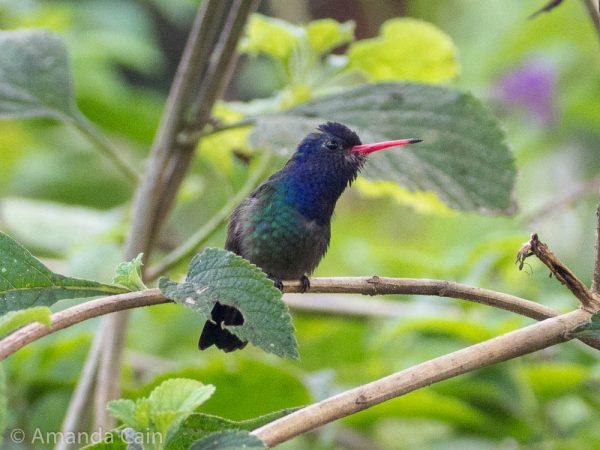
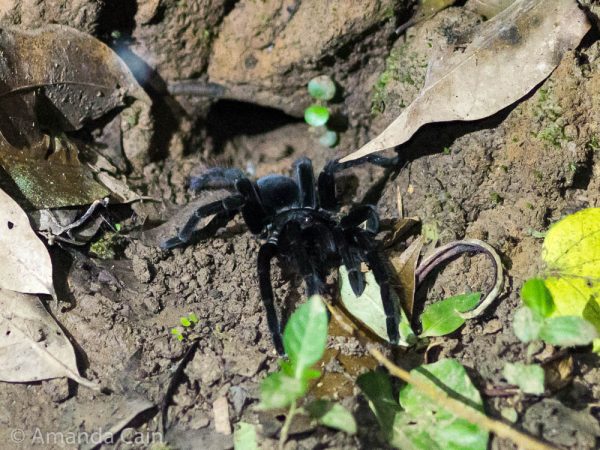
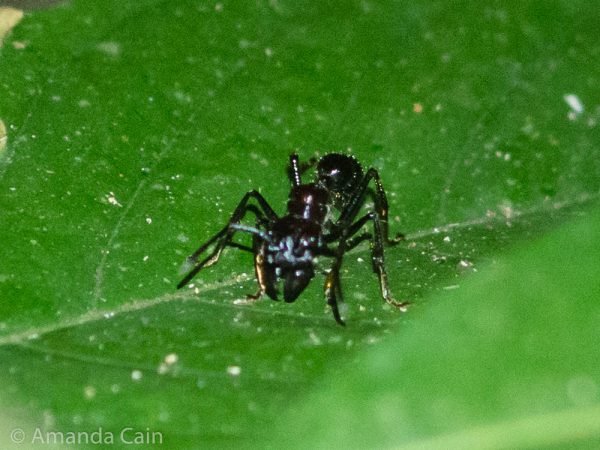
Once we made it to our next lodge we had a bit of time for more hummingbird spotting before heading off on a night-walk through the jungle. In the beginning we were happily walking along, not really knowing what was around us. As we went along Juanjo kept pointing out all sorts of creepy crawlies, poisonous things and dangerous plants. There was the 24 hour ant (at least 5cm long), fire ants, pretty much every mushroom and a big nest of tarantulas. Yes, they live in big groups in nests!
By the end of the walk we were all trying to avoid straying too far from the centre of the path. That didn’t seem to stop every flying insect in the jungle trying to get into your eyes, nose, mouth or ears. Those nets you wear over your head may look super dorky, but are so worth all the mocking on a night walk. We made fun of our new friends (Swati & Karan) for wearing them, by the end of the walk we would’ve given up a bar of precious chocolate for one.
Day 3 – Up The Manu River
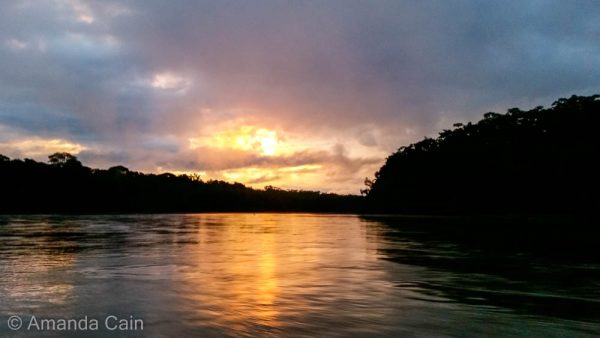
On our third day we finally made it to the heart of Manu National Park, the Manu River. We set off an hour before dawn (we snuck out early to avoid the other group at our lodge) and it started out nice enough. We even got to see a beautiful sunrise over the river. But soon afterwards heavy rain came in and did not want to go away. For some strange reason, rainforest animals don’t like the rain. It rains in the rainforest. A lot. You think the animals would be used to it. They’re not. So we didn’t get to see much for the first half of our trip. But on the plus side we finally got to test our fancy rain jackets and pants in proper rain. We bought these for Patagonia (which is famous for wild weather) but hadn’t used them for rain until this point.
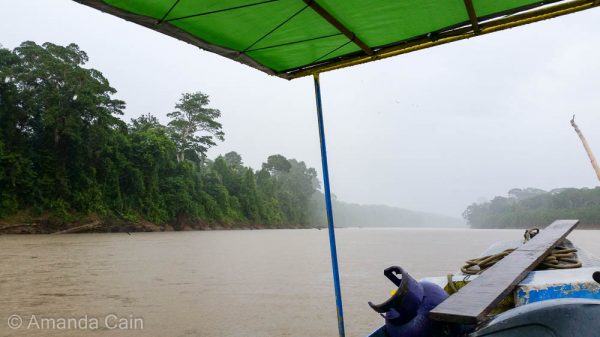
After lunch the weather finally started to clear and some animals came out to the riverbank to bask in the sun. Then we got lucky.
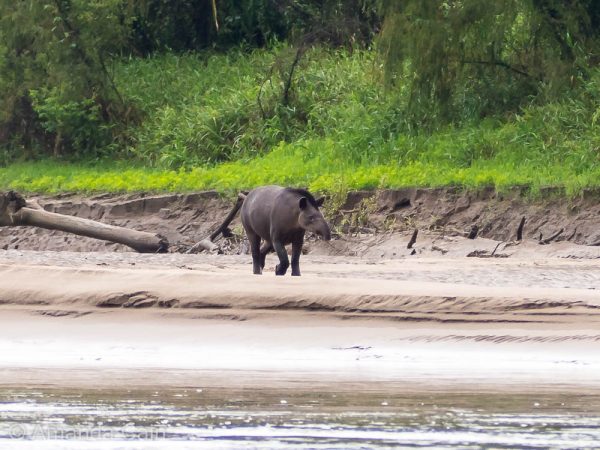
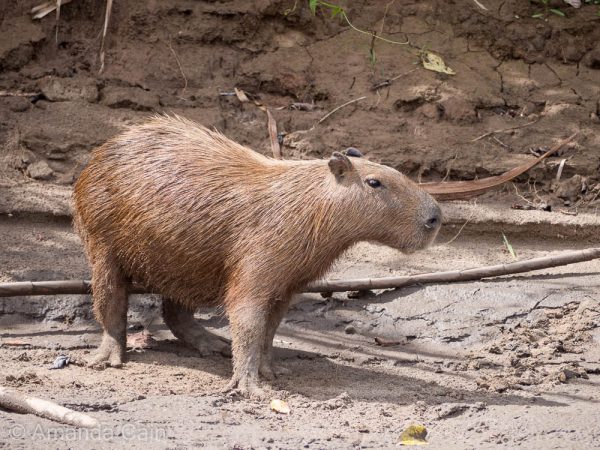
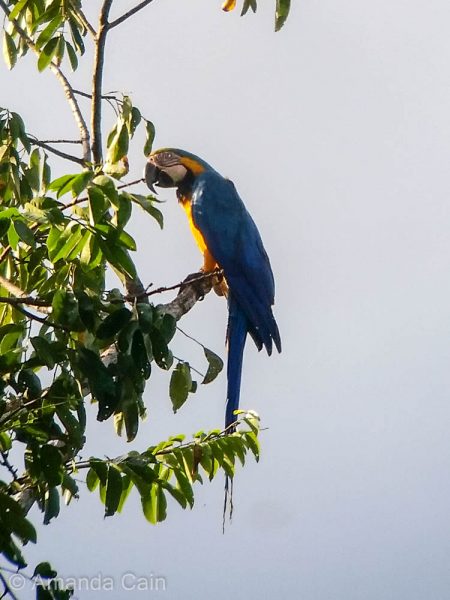
Friendly Caimans
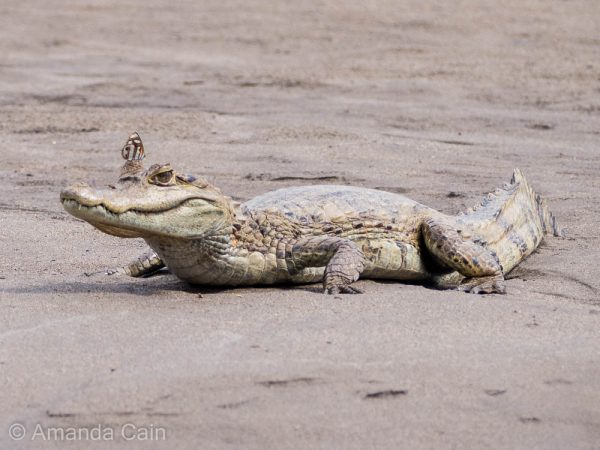
There were a lot of caimans around, especially once the sun came out. One came up close to our boat and we were all excited and leaning over to get a closer look. But it turned out that our poor cook Jorge was terrified of them. When we turned around he was leaning so far out the other side of the boat it looked like he would fall out. We eventually made it safely to our jungle lodge and were finally in the heart of Manu. When we signed in at the ranger station there were only 10 other tourists in this part of the park. It’s a very isolated part of the world and you feel like you have it to yourself when you’re on the river.

“friendly caimans”! Lol!! Very nicely documented, you!
They were extra friendly, that one that came up to the boat wanted to come and say hello 😛
so that is another name for that crocodile, more curious to see if there is dinner. Love the different birds, unusual