After the last post focused on things to see in Mexico City, this post is about the ancient Mexican ruins you can see that aren’t too far from Mexico City. So you have huge pyramids and impressive sites like Teotihuacan, and also some smaller ones with things like warrior statues, brightly coloured ancient murals and of course plenty of smaller pyramids.
Teotihuacan
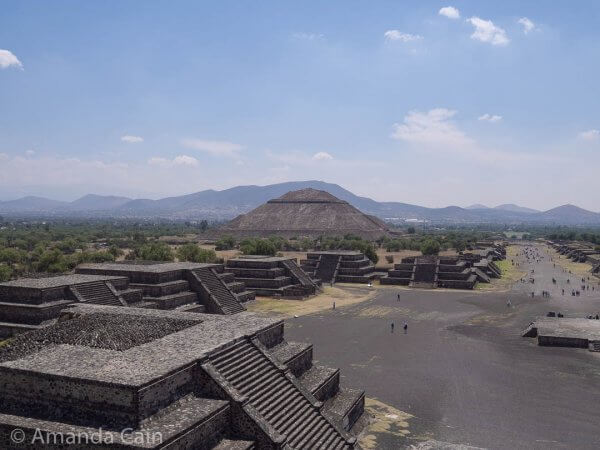
This is the oldest and probably most impressive of all the ancient sites in the area. Building started around 2000 years ago and the city grew until it was the 6th largest city in the world at that time (500AD). They think that 125,000 people lived here at its peak. So the site is huge, with pyramids, plazas, temples and houses everywhere. But the most noticeable things you see when you arrive are the two giant pyramids: the Pyramid of the Sun and the Pyramid of the Moon.
Pyramids of the Sun and Moon
The Pyramid of the Sun is 65m high and completely dominates everything around it, except for maybe the Pyramid of the Moon which is a bit smaller.
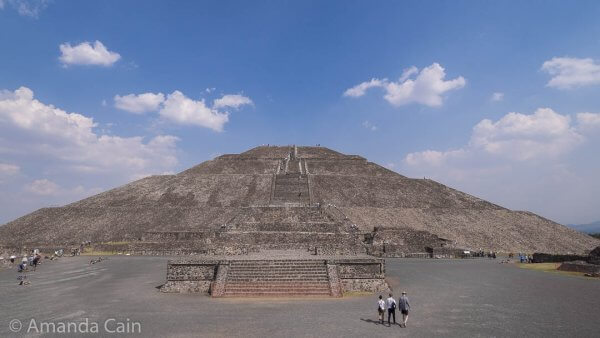
You can climb up both pyramids, but you can only get to the very top of the Pyramid of the Sun. It’s a tough climb and pretty steep in some parts. People were going down one set of stairs like a ladder because it was that steep. Today the pyramids are a dark grey, the same colour as the stones. But back in ancient times they were covered with a thick layer of plaster and then painted with murals. There’s not much left of the murals, but there are some impressively intact pieces in the mural museum.
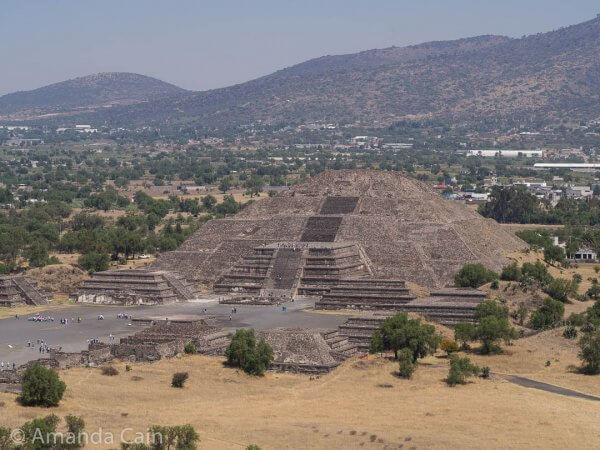
The Avenue of the Dead is a wide road that connects the Pyramid of the Moon with the Pyramid of the Sun and the Temple of the Feathered Serpent. All along the road are plazas with smaller pyramids and temples and other buildings. It’s quite an impressive road to walk down.
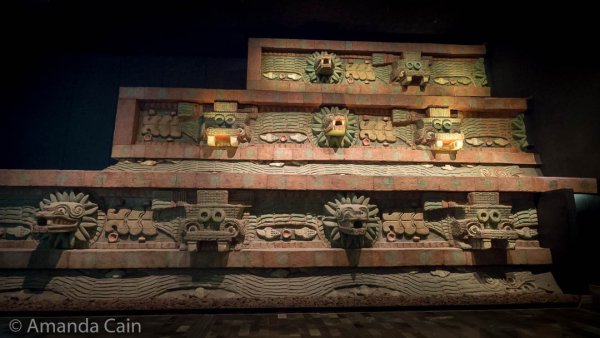
Temple of the Feathered Serpent
The Temple of Feathered Serpent still has a lot of its carved decorations intact. The faces are of the Feathered Serpent and the Rain God.
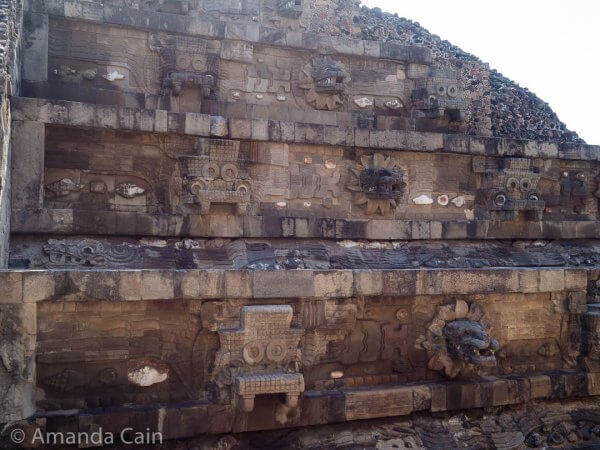
Palace of Quetzalpapalotl
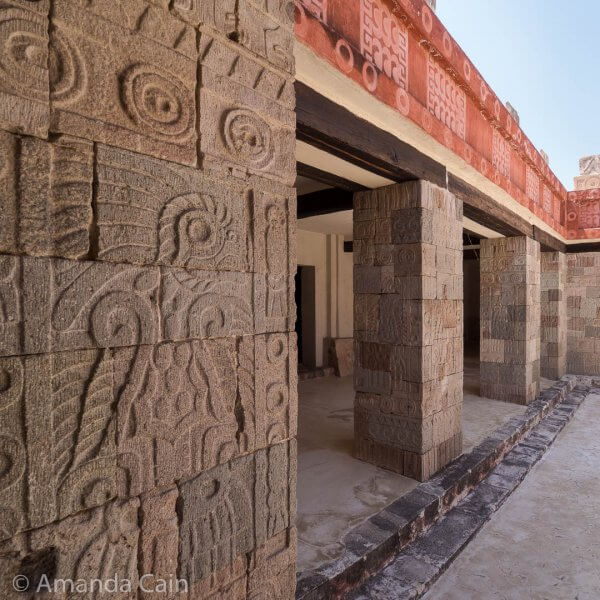
Another interesting thing to see is the Palace of Quetzalpapalotl where there is a courtyard with owls carved into the pillars, and also some murals still intact on the walls.
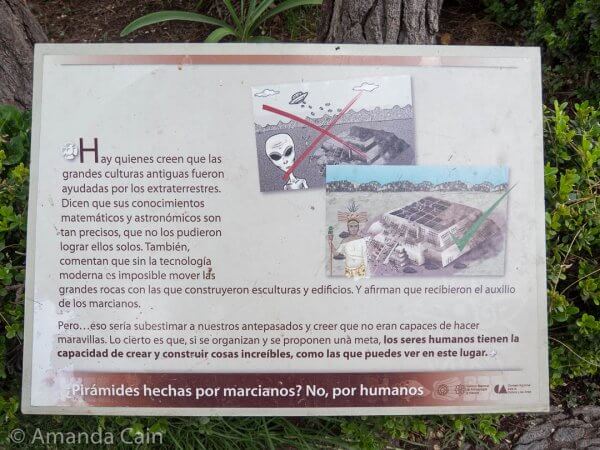
Around the 6th century AD a lot of the city was burned (possibly an internal conflict), and they think that by the 8th century it was abandoned. Hundreds of years later the Aztecs saw the ruins and believed that it was impossible that humans built them, and that the gods created them.
Tula
After Teotihuacan lost power, a bunch of smaller civilisations became powerful in their own area. One of these was the Toltecs of Tula. At this site there are several medium sized pyramid-temples as well as a large palace (all that’s left are the columns).
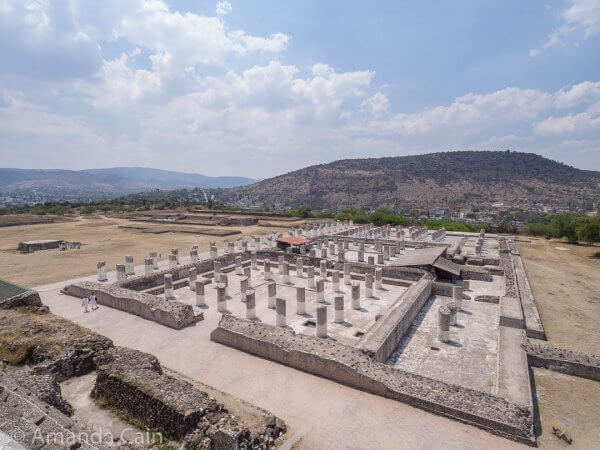
At the top of one of the pyramids, the Pyramid of Quetzalcoatl, there are four huge pillars of black stone carved into the shape of warriors.
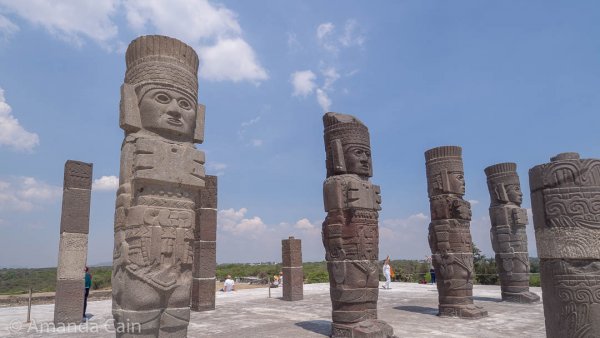
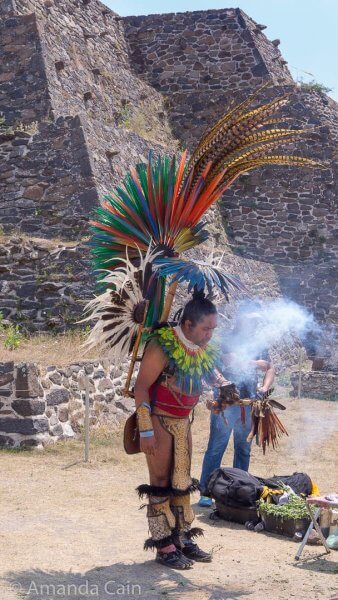
Spiritual people also come to Tula for the equinox. By coincidence went there during the spring equinox and there were a large group of people all dressed in white channelling energy from the top of the pyramid. There were also shamans performing cleansing ceremonies for the group and other interested people.
Xochicalco
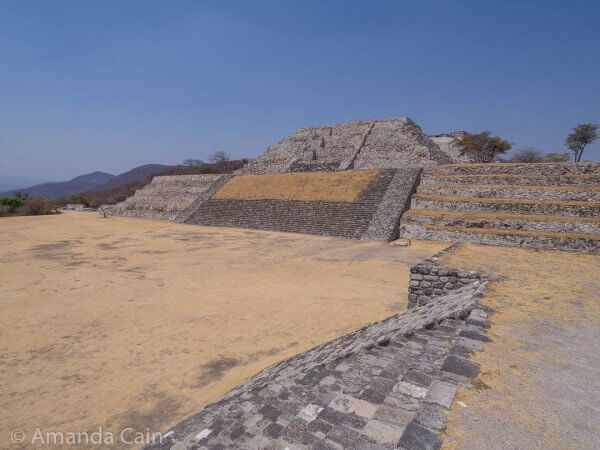
Another powerful city that came after the fall of Teotihuacan was Xochicalco. This city is built on top of a big hill overlooking the valleys below. In the ruins you can see several pyramid-temples, plazas, ball courts and the palace.
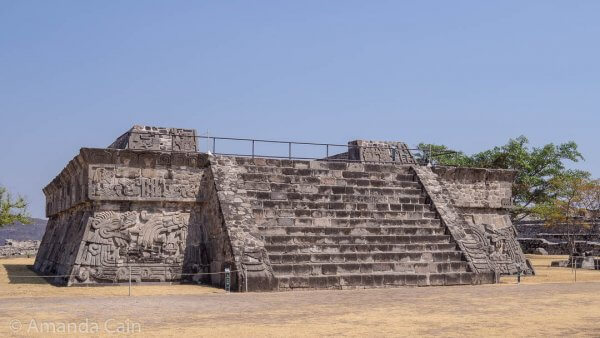
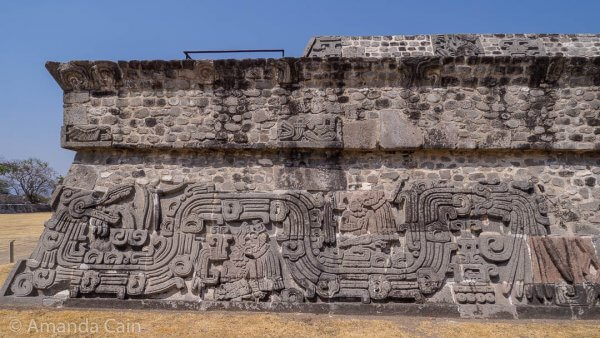
The most impressive is probably the Temple of the Feathered Serpent, which has carvings of the feathered serpent god surrounded by important people. The carvings run all the way around the sides of the temple.
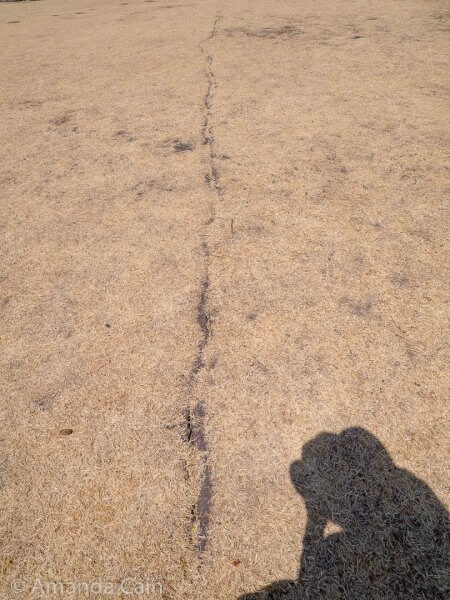
They also had a steam room. Who knows why they would have something like that when it’s bloody hot and sunny out. Dehydration has been a common theme in all our visits to ruins. There’s also an observatory which they used to follow the movements of the sun, but we couldn’t see it because the 2017 earthquake damaged parts of the site. You can even see cracks in the ground created by the earthquake.
Cacaxtla
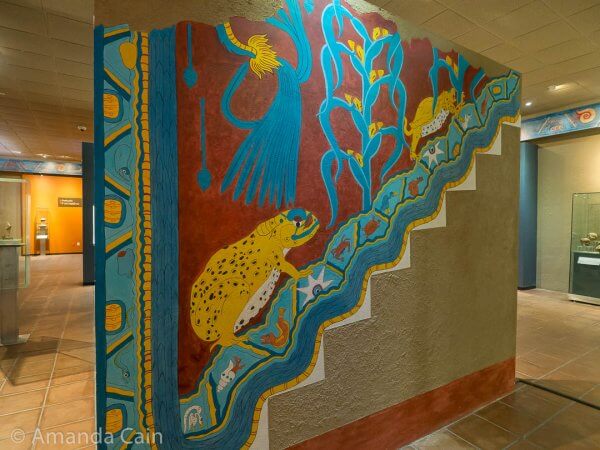
This site is pretty compact, with just the Great Base and two small pyramids. The Great Base is actually a large palace with temples. There’s not too much left of the palace apart from the remains of walls that show the floor plan. But there are some brightly coloured murals that are still intact after over 1000 years that you can see.
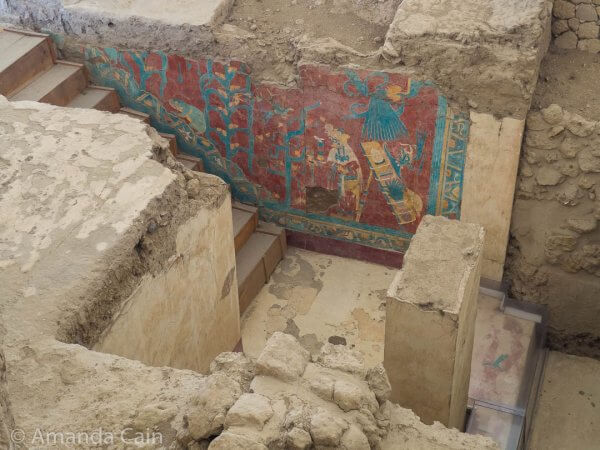
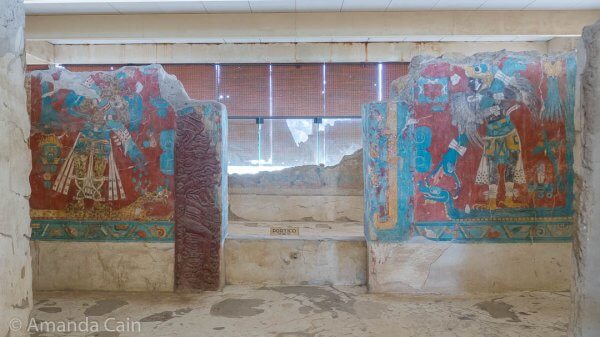
The main reason they survived is because when they expanded the palace, they buried the old sections to build new ones on top. So this protected the old murals from the elements. Since you can’t get right up close to the murals, they’ve helpfully recreated the murals in the site museum so you can get a good look.
Xochitecatl
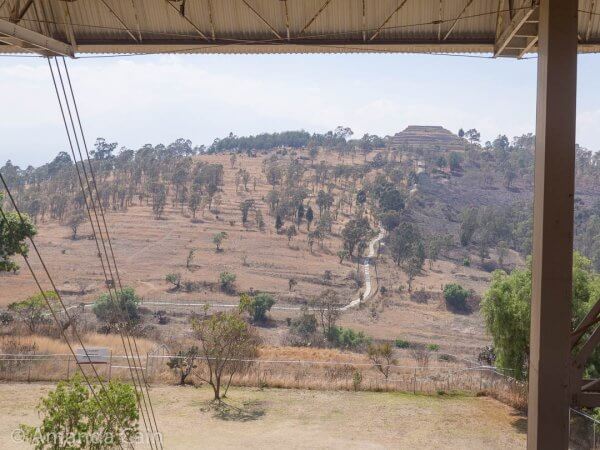
This is another small site only 1km from Cacaxtla. You could actually walk between the two sites using a nice path they built. Except you can’t. Apparently the path is only open on weekends, and we were there on Monday. We had to take two van rides and a long hot walk up the mountain to get to Xochitecatl.
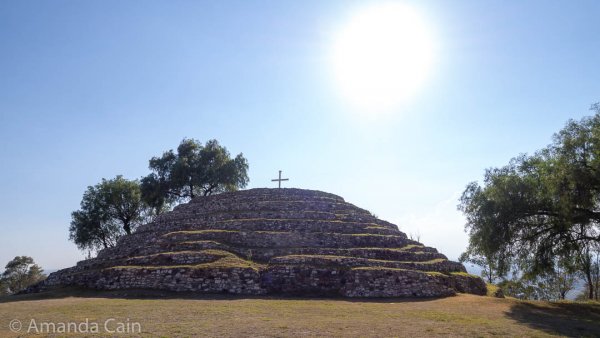
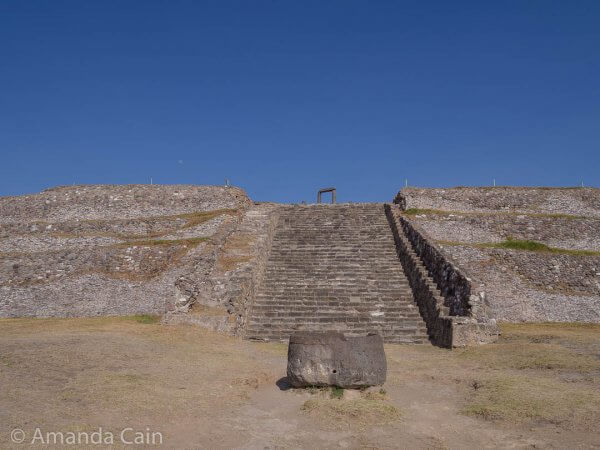
The site itself is actually older than Cacaxtla, more than 500 years older, so it has some different structures like a spiral pyramid, giant stone basins for offerings and mini “Stonehenge” structure on top.
Cholula
Cholula is famous for its Great Pyramid. The town itself has had a permanent population since about 2000 BC, and was never abandoned like the other ruins we went to. Different groups conquered the town throughout its history, and each group added to the Great Pyramid to make it the largest pyramid in the world by volume. The Great Pyramid in Egypt is taller (139m vs 66m), but the base of Cholula’s pyramid is much bigger (230m vs 400m).
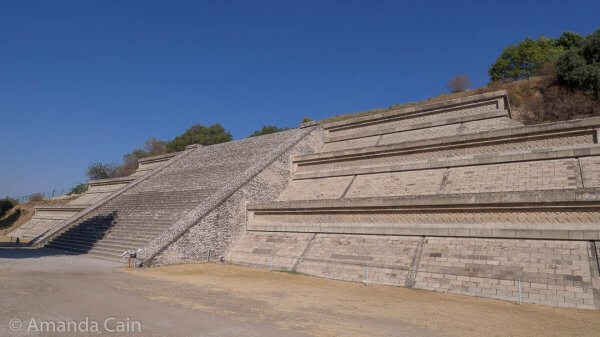
They haven’t been able to to reconstruct the pyramid completely like the ones at other sites. Mainly because the town of Cholula never stopped existing. So there’s a lot of buildings on top of the lowest section of the pyramid. And a church on top, lovingly placed there by the Spanish of course.
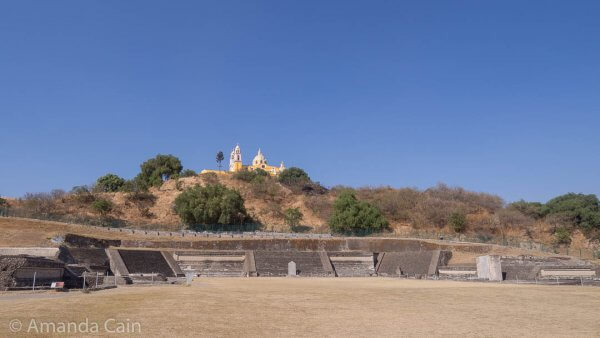
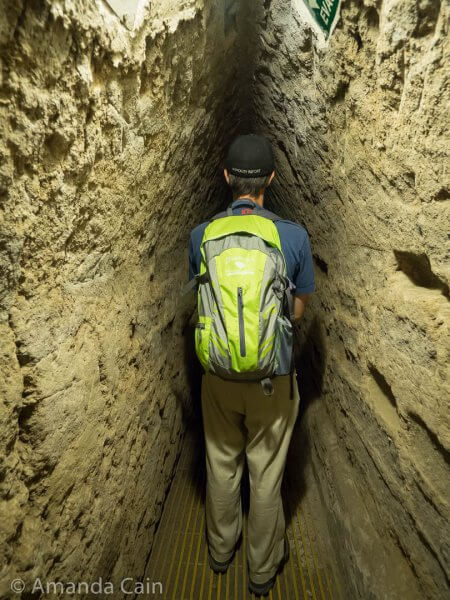
They did some excavations from the 1930s – 1970s by digging tunnels through the pyramid, and ended up with 8km of tunnels in a 400m x 400m area. Parts of the narrow tunnels are open and you can walk through them.
Templo Mayor
This last ruin is the Great Temple of the Aztecs in Mexico City. The temple itself is in the heart of Mexico City behind the cathedral. The Aztecs built the first version of it when they settled the area in 1325. Over time various Aztec rulers enlarged the temple six more times. When they enlarged it they didn’t destroy the old one, they used the old one as a base for the new one. So each enlargement completely covered the previous one. Which makes the Templo Mayor a bit like those Russian dolls, or an onion. As you walk through the site you can see the different layers pretty clearly.
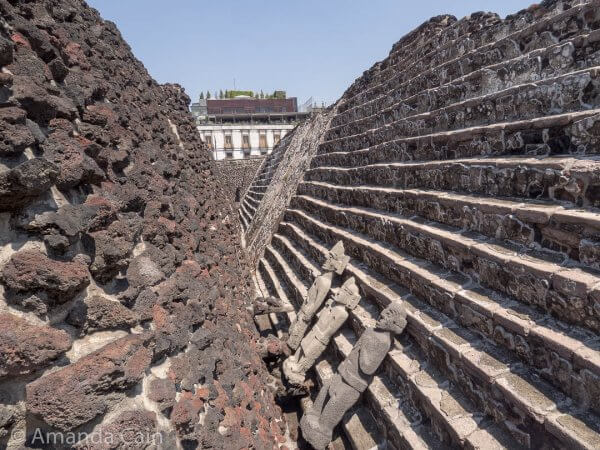
There’s not much left of the temple because the Spanish used most of the stones from the temple to build the cathedral.
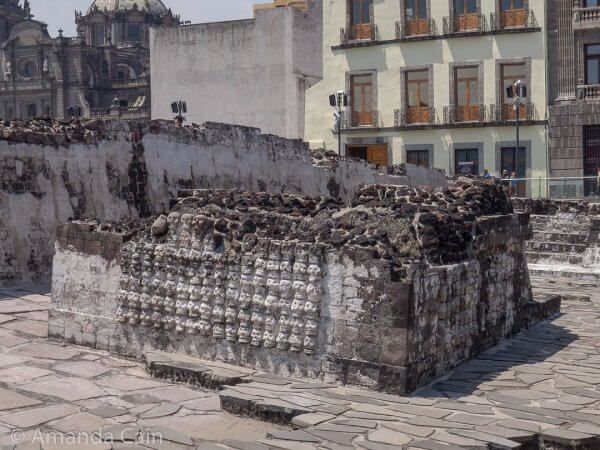
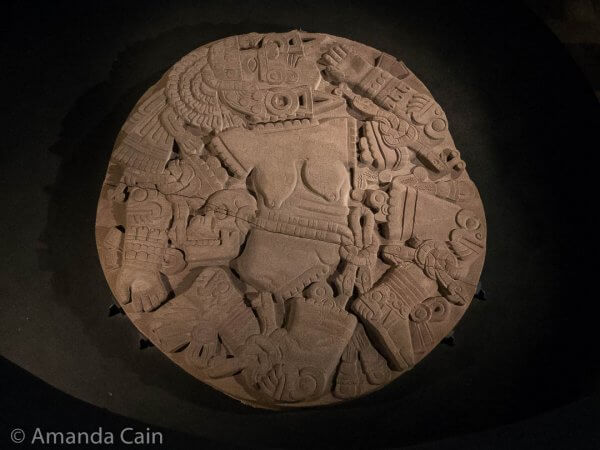
While they were excavating, the archaeologists found all sorts of interesting things; some went to the site museum and others went to the main Anthropology Museum. Some of the most impressive things they found were the huge carved stone slabs and discs.
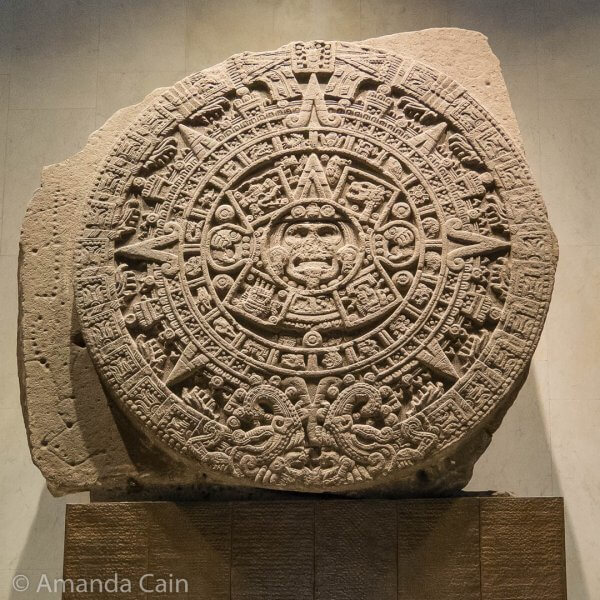
The Calendar Stone is one of them and has the different calendar periods carved into it and used for gladiatorial sacrifices. Another is the disc showing the dismembered body of the goddess Coyolxauhqui. Construction workers discovered this huge stone disc in 1978, and this discovery is what made the authorities realise that there was something very important on the site. So this stone disc started it all, leading to the excavation of the Templo Mayor site.
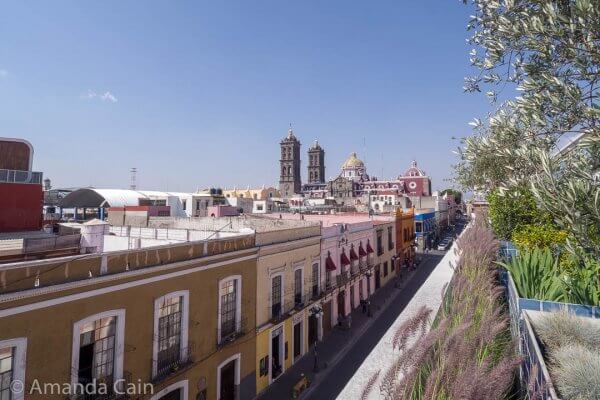
Bonus Photos From Puebla
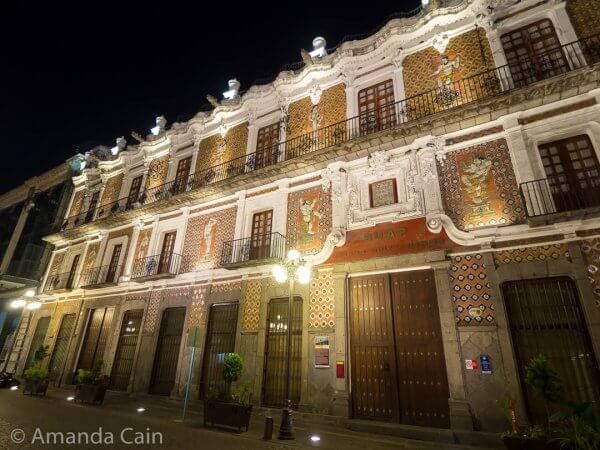
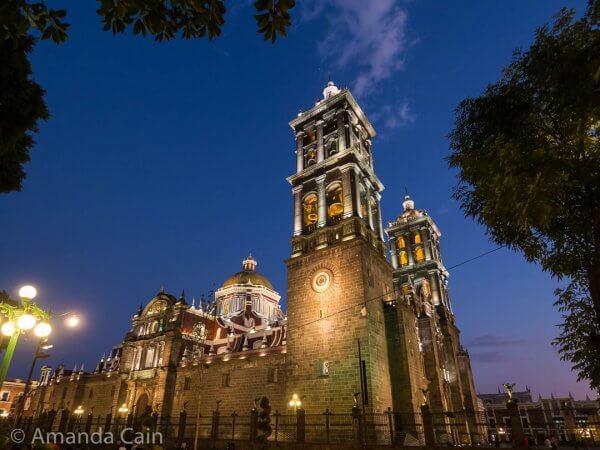
To finish off this post here’s some pictures from the charming colonial old town of Puebla. It’s a very nice place to stroll around, and also a good base for seeing some of the ruins mentioned above.

Amazing places Amanda and Pedr, the names of places very long and unusual.
I am having a little adventure with you, with the places you went through.
Much love,
Mum
Thanks Mum, glad you can have a little adventure with us. 🙂