• Skip to main content
  • Skip to primary sidebar
  • Skip to footer

Allons-y

Adventure travel for regular people

  • Blog
  • Adventures
  • Tips and Advice
  • Gallery
    • Landscapes Gallery
    • Animals Gallery
    • Cities Gallery
    • People Gallery
    • Croatia Gallery
    • France Gallery
    • Italy Gallery
    • Norway Gallery
    • Spain Gallery
    • UK Gallery
    • USA Gallery
  • About
Allons-y > Photo Journal > Semana Santa: Holy Week in Spain

31 March, 2016 By Amanda

Semana Santa: Holy Week in Spain

Happy (late) Easter to everyone. This year for Easter we didn’t get to have any chocolate eggs or bunnies, since they’re pretty scarce in Spain, but we did get to enjoy the celebrations Spanish style which is to watch the processions.
Granada - Semana Santa 066

The processions start a week before Easter Sunday and take place every evening/night right up to Easter Sunday.
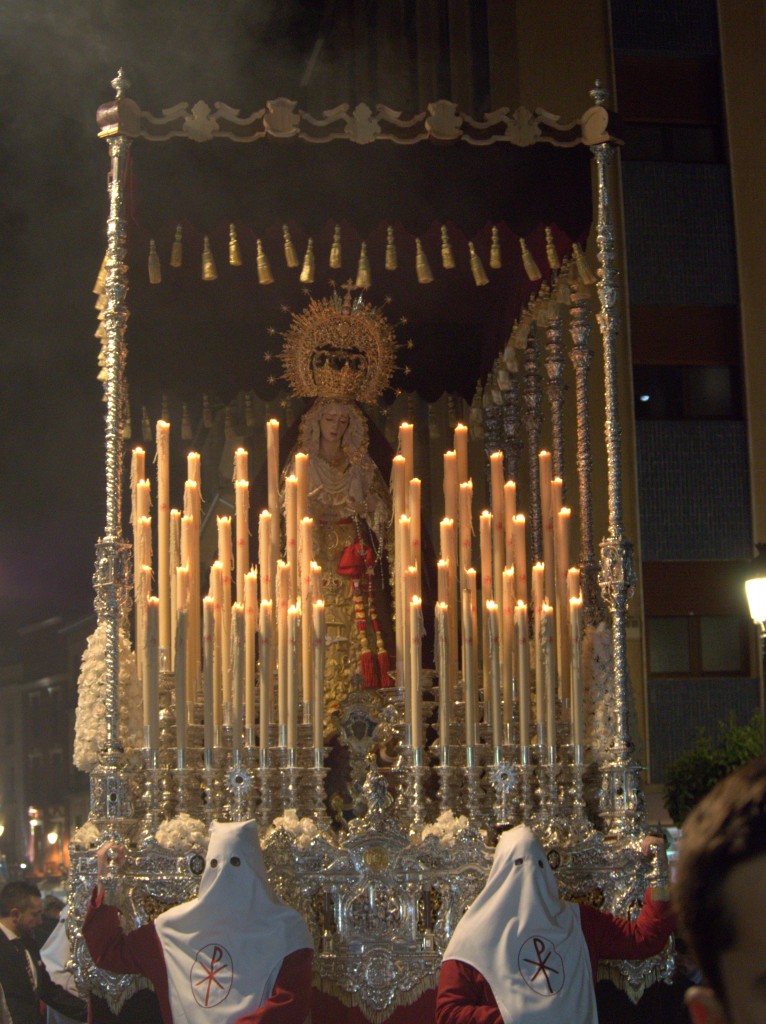
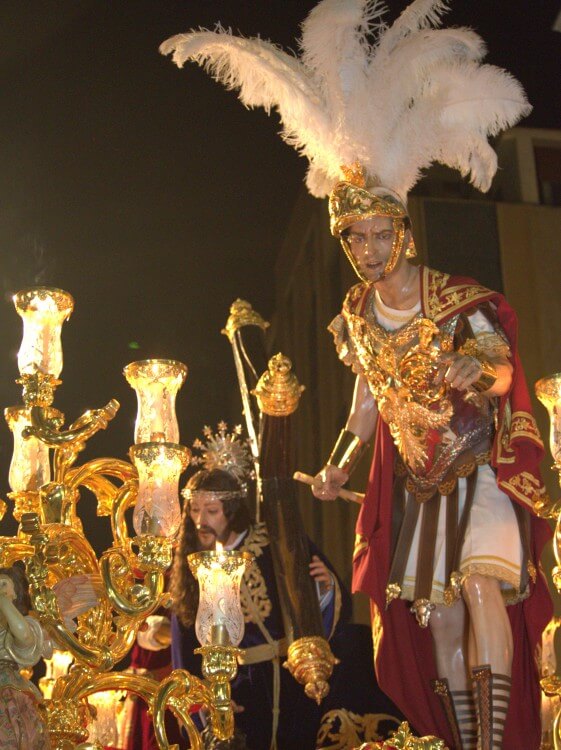
One of the elaborate floats or pasos built to carry the image of the Virgin Mary.

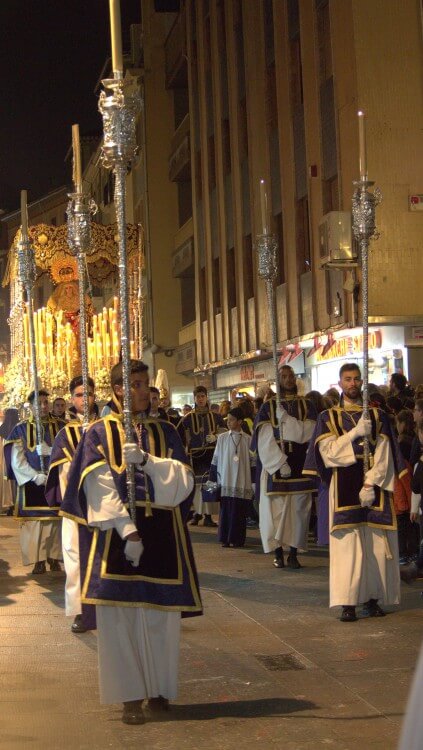
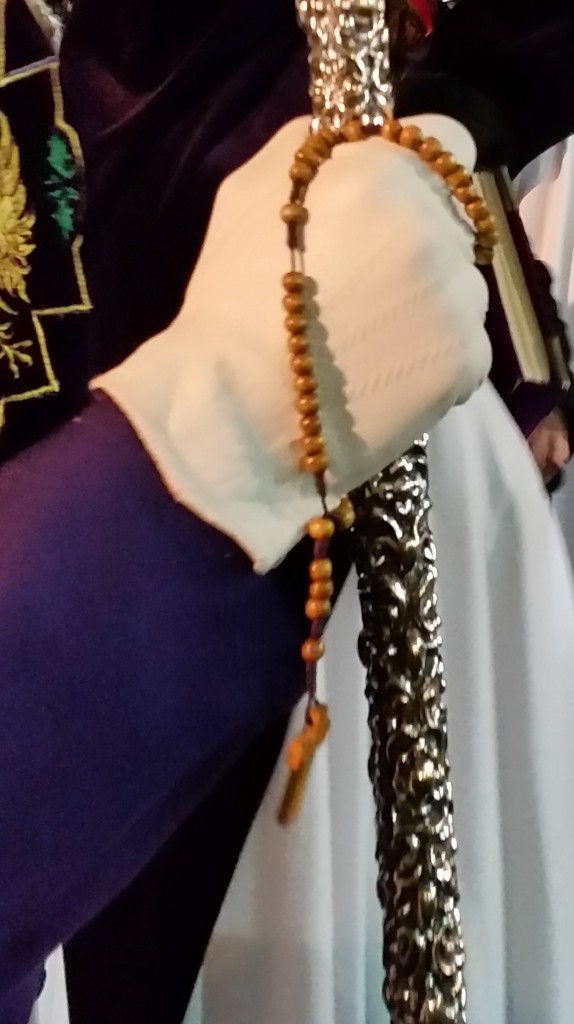
The processions are basically parades of people dressed up who carry holy images through the city. Marchers carry candles, rosaries, crosses, ancient bibles, silver and golden staffs as well as the huge floats of holy images. Mournful marching music and the smells of incense fill the air.
Granada - Semana Santa 077
The top of one of the floats.
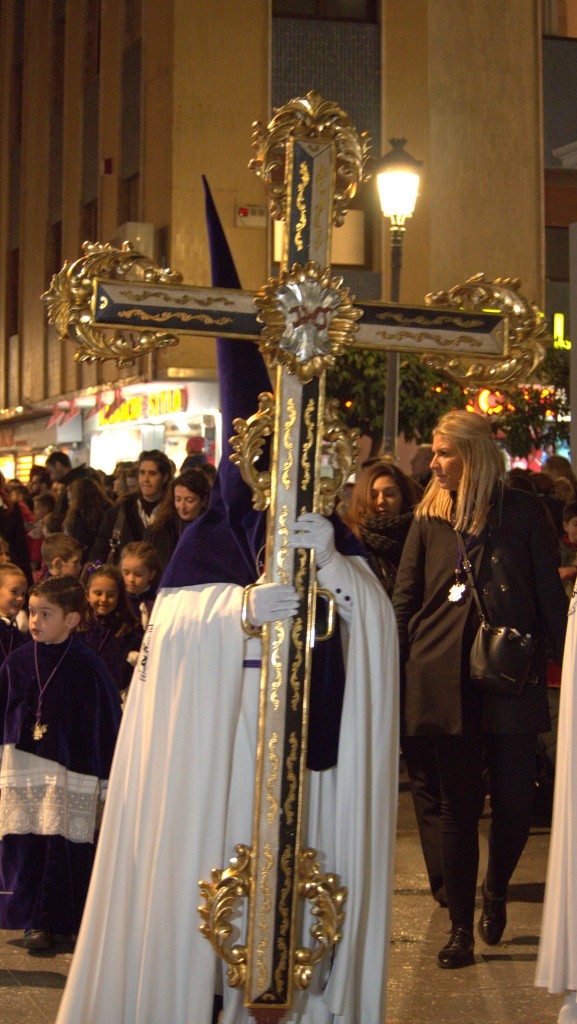
A large cross is carried by the procession leader of each brotherhood.
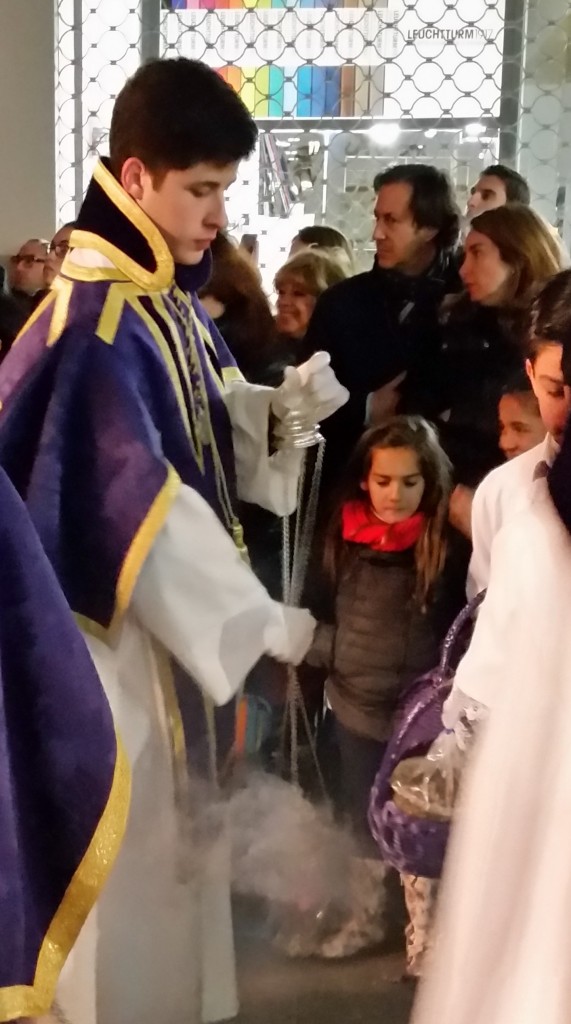
Incense is burnt in censers which are swung around by these guys.

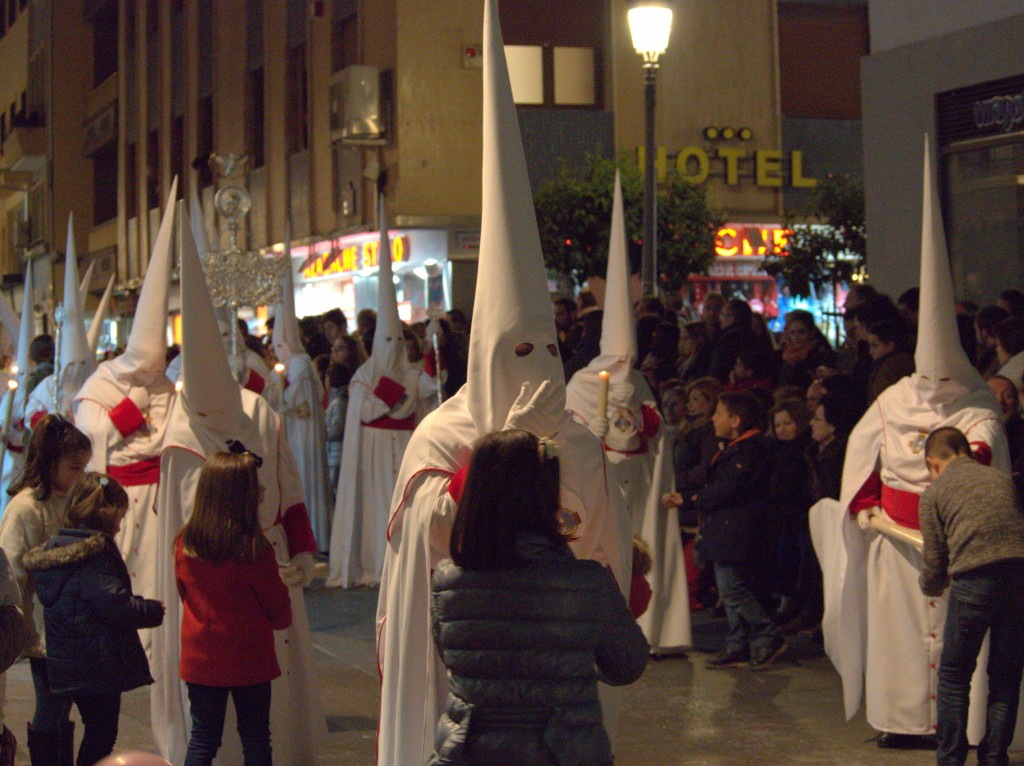
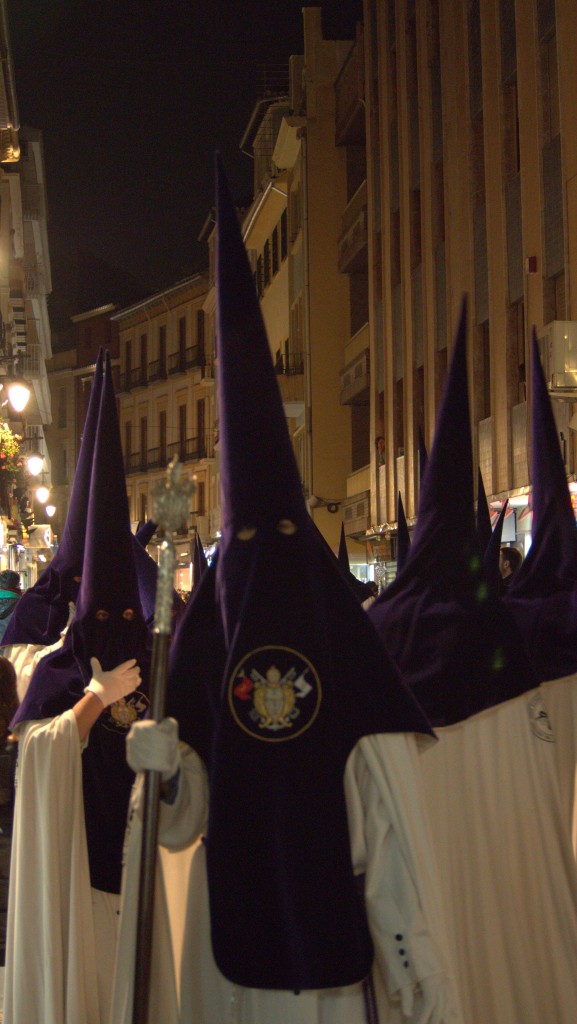
The churches in the city organise a procession from their church to the cathedral where the members will dress up in various ways depending on their role in the procession. The most striking outfit is the one worn by the brotherhoods of the churches, which to non-Spanish people look a bit like Ku Klux Klan outfits. Though I’m pretty sure the Spanish were dressing this way first.
Granada - Semana Santa 070

The guys in the brotherhoods dress this way because they are seeking penance for sins previously committed and want to hide their identity. Because of this they are also called ‘penitents’. Some of the penitents will even march barefoot through the streets.
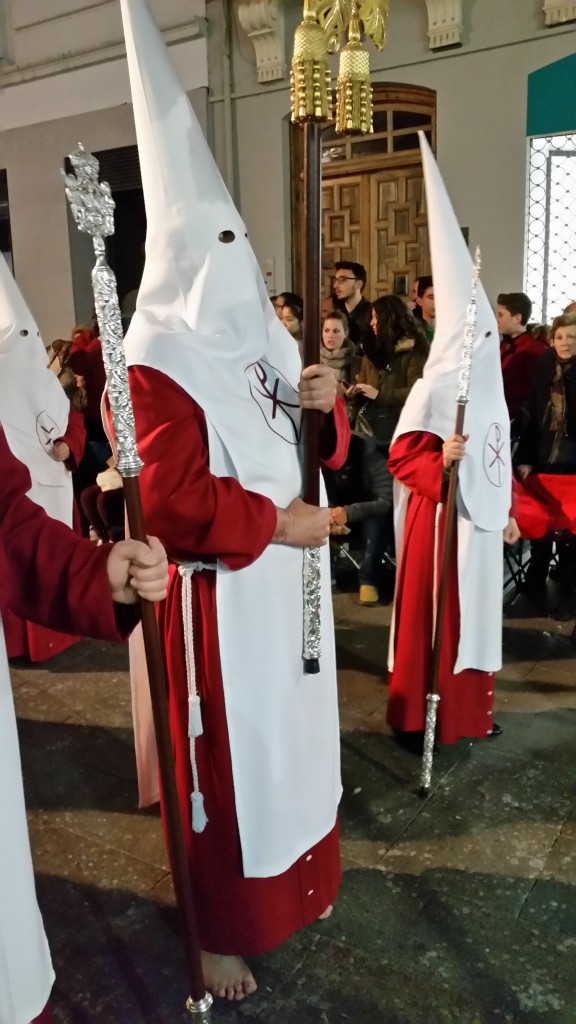
Granada - Semana Santa 006 a

Some of the penitents march barefoot like this guy here.

Women in the processions dress in black with a long black veil. They also carry a rosary and a small card with an image of Jesus or Mary as well as a large candle.
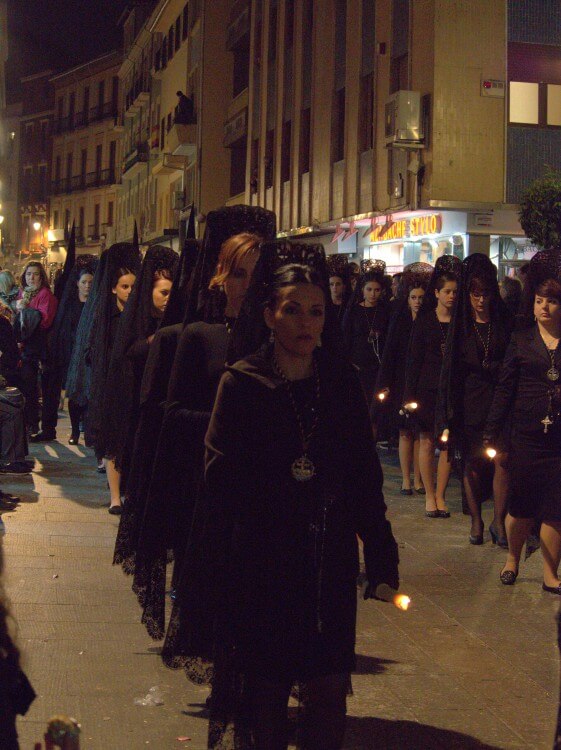
Women dressed in black marching in the procession.

The big highlight of the processions are the pasos, which are huge richly decorated floats that carry sculptures of Jesus or Mary.
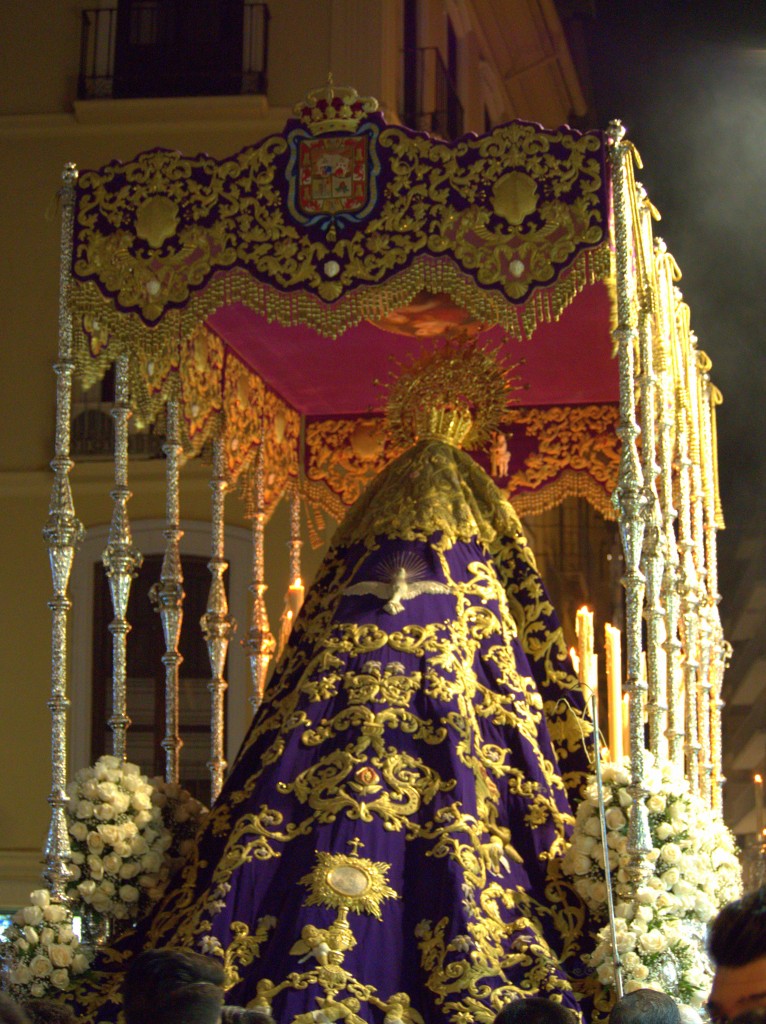
Elaborate robes are made for the holy images.

These painted wooden sculptures were made by master artists and can be hundreds of years old. The bases of the pasos are made of solid carved wood, or silver or even gold. These can get very heavy and weigh up to 2000kg. And they aren’t mounted on wheels either, they’re carried on the shoulders of about 40 big burly blokes. If you do the maths that works out to 50kg each! And some of the processions can take 10 hours from leaving the church to returning.
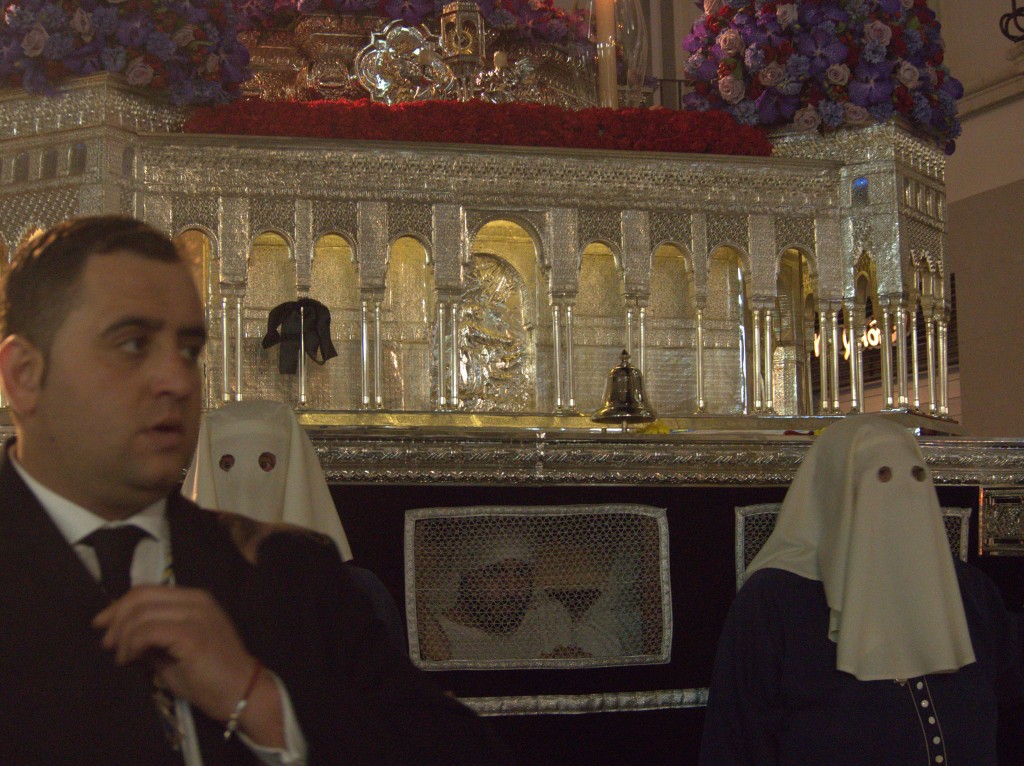
You can actually see the guys carrying the paso through the mesh. There are about 40 of them under each one.

They carry the paso a few hundred metres before they put it down for a rest. Every so often they will even change crews of carriers so the others can have a rest. When the paso is lifted off the ground again everyone in the crowd claps. It’s considered a great honour to be one of the carriers. Each paso is followed by a marching band which keep the paso carriers in step.
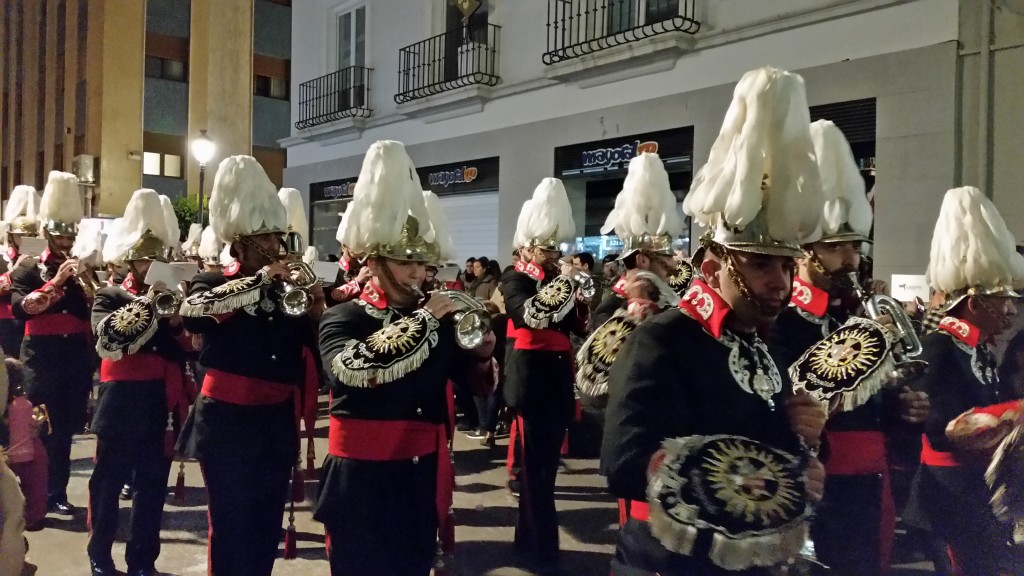
All of the holy images are followed by a marching band.
A marching band follows the holy images.

As the pasos passed people would reach out to touch them and make the sign of the cross. I knew religion was important to the Spanish but it was different to see the devotion first hand.
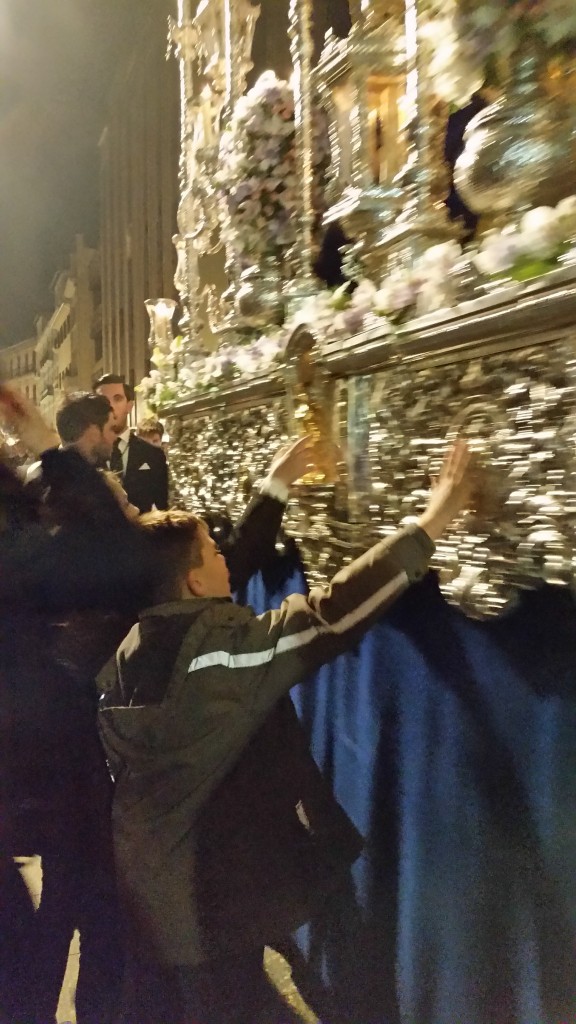
As the holy image passes by, the people in the crowd would reach out to touch it and make the sign of the cross.

Another interesting thing we saw during the processions were the kids in the crowd making balls of wax from the drips of the candles from the marchers. Because the pasos had to stop regularly there was a lot of time where the marchers weren’t moving and this is when the kids would run up and ask for some wax.
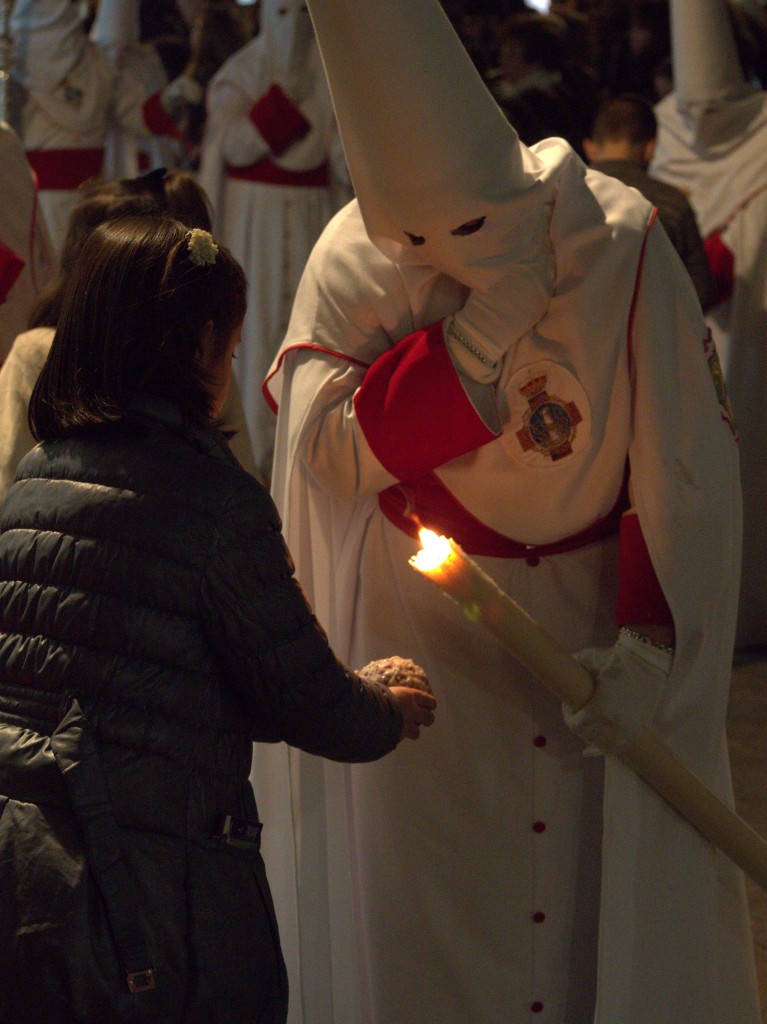
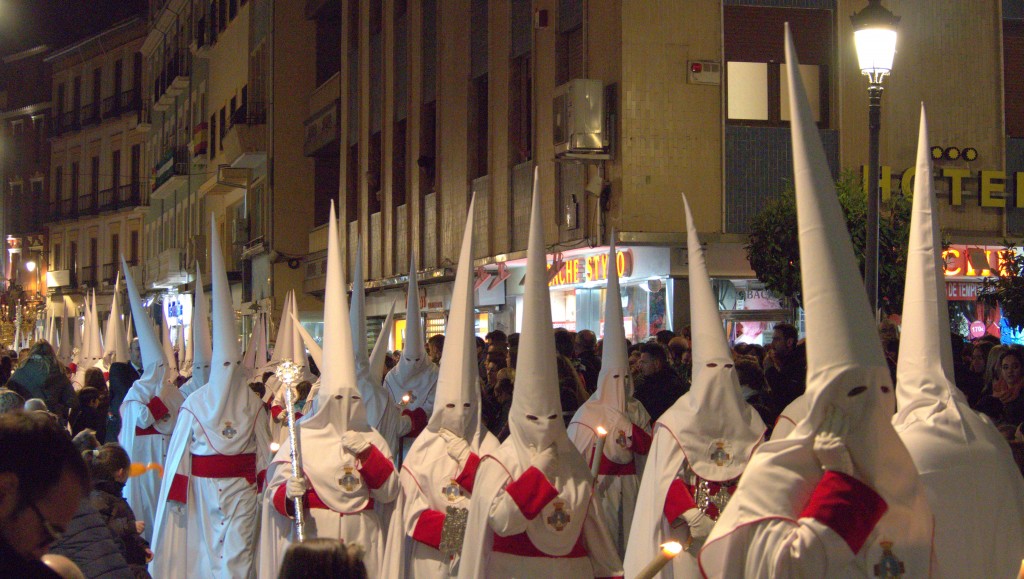
Children make wax balls from the penitents' candles, some of the penitents are not much older than the children making the balls.
Children make wax balls from the penitents’ candles, some of the penitents are not much older than the children making the balls.
What you expect a religious procession to look like.
What the procession actually looks like most of the time.

Not everyone would let them have wax, and there were some brotherhoods where the senior penitents would shoo the kids away so it wasn’t a an officially sanctioned activity. We think that it may have been something parents came up with to try and keep the kids from getting bored during the regular stops.
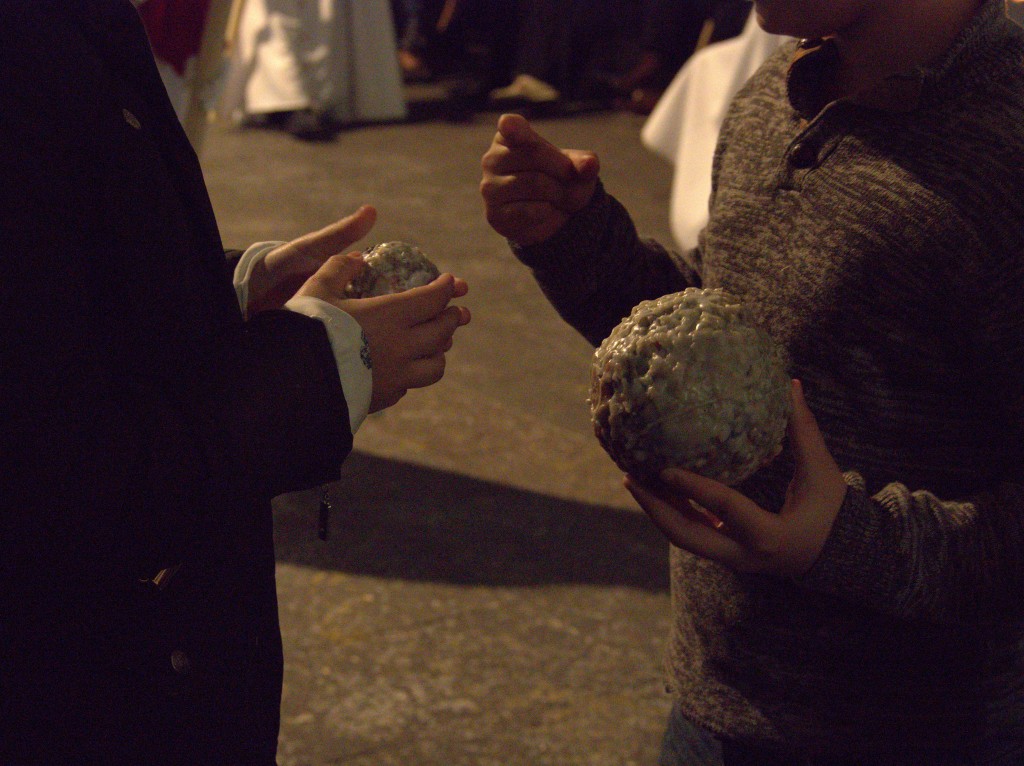
Children comparing their work.

After a week’s worth of processions everyone is woken up on Easter Sunday by the church bells ringing as well as all the kids in town running around ringing small bells to celebrate the resurrection of Jesus. It was a very interesting and different way to celebrate Easter compared to back home and we’re happy we got to see it.
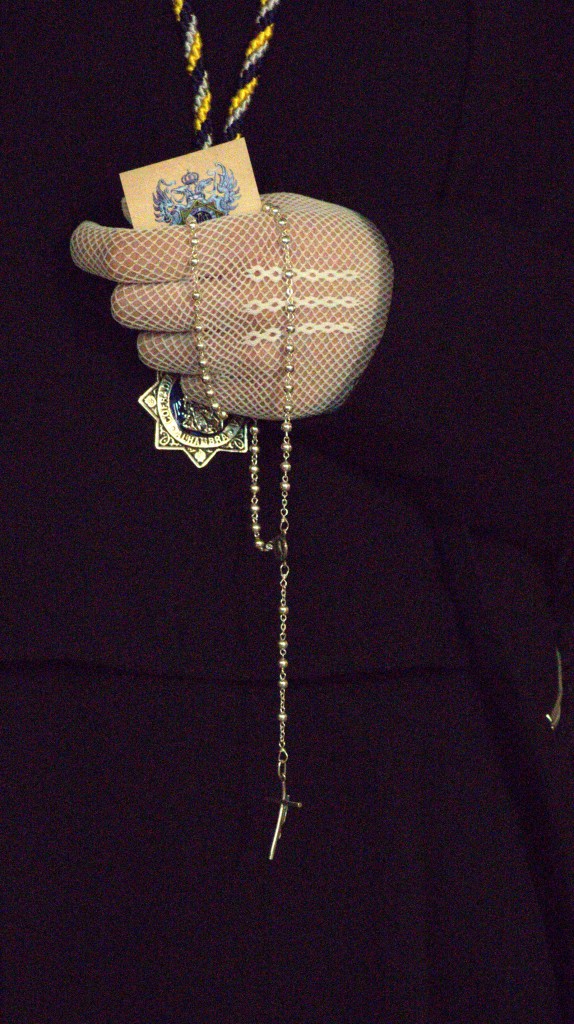
A woman carrying the rosary and a card with an image of Jesus or Mary.

More Roman Ruins and Another Pilgrimage Route
Las Fallas: A Festival for Pyromaniacs

Related

Filed Under: Photo Journal, Travel Updates Tagged With: Andalucia, City Travel, Festivals, Granada, Semana Santa, Spain

Reader Interactions

Leave a Reply Cancel reply

Your email address will not be published. Required fields are marked *

This site uses Akismet to reduce spam. Learn how your comment data is processed.

Primary Sidebar

Search

This error message is only visible to WordPress admins

Error: No connected account.

Please go to the Instagram Feed settings page to connect an account.

Recent Posts

  • Ferrara – An Underappreciated Gem
  • Want to See Epic Mountain Scenery? Go to the Dolomites!
  • Florence for Pedr’s Fortieth Birthday
  • The Highlands of Guatemala
  • That Time We Thought We Were Going to Die in Guatemala

Categories

Archives

Footer

Contact Us
Archives

About

Hi, we're Amanda and Pedr and we think that you don't need to be an athlete or look like a fitness model to be able to enjoy adventurous activities. We're just two regular people who don't fit the young / beautiful / athletic traveller mould, but we're still doing all sorts of adventurous things. Read More

Copyright © 2026 Amanda Cain · Log in