Mexico City is one of the biggest cities in the world and has plenty of interesting things to see and do (and eat!). You’ll be spoiled for choice. The main difficulty is that the city is so bloody big that it takes a long time to get between places. So it’s best to spend a day in one part of the city rather than wasting time in transit. We were in Mexico City for a bit under two weeks and there were still plenty of things we didn’t see. But we tried our best!

The Historic Centre
This is where most people go, even if they only have a very short amount of time. You can see the Cathedral, the Templo Mayor, important government buildings, as well as plenty of beautiful buildings from the colonial period. One thing you’ll definitely notice in the old part of Mexico City is just how wonky a lot of the buildings are.

This is because Mexico City is built on a drained lake, so the land is pretty soft and shifting around. And the semi-regular earthquakes and flooding don’t help either.
Cathedral
The Spanish built the cathedral next to the site of the Templo Mayor (the great temple of the Aztecs). They couldn’t build it on top of the temple (like they’ve done at plenty of other places) because they needed the stones from the temple to build the cathedral.
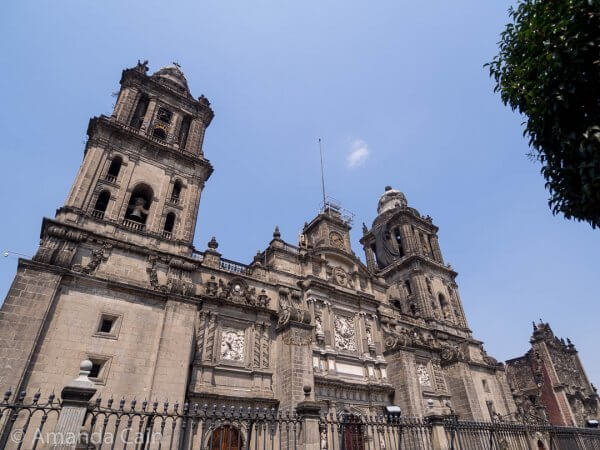
So if you’re wondering where the old Aztec temple went, that’s what happened to it. The cathedral is filled with very ornate altars, organs, paintings and other decorations.
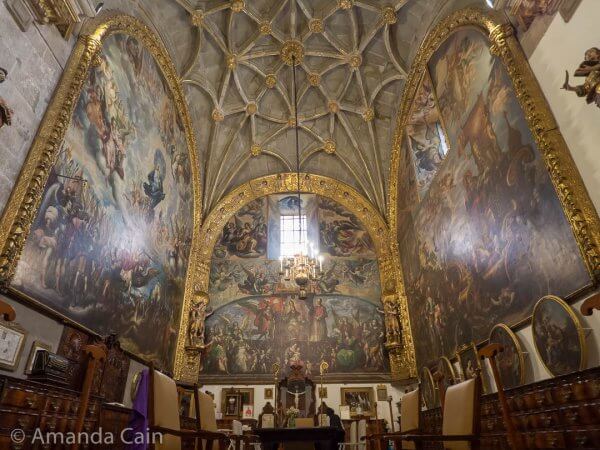
The cathedral is no stranger to the sinking land of Mexico City. They’ve even installed a pendulum in the centre dome which tracks how far the building has shifted over it’s centuries of existence.

There’s also an interesting statue outside the cathedral of Pope John Paul II. He’s a much loved figure in Mexico, having visited five times, so they dedicated a statue to him.
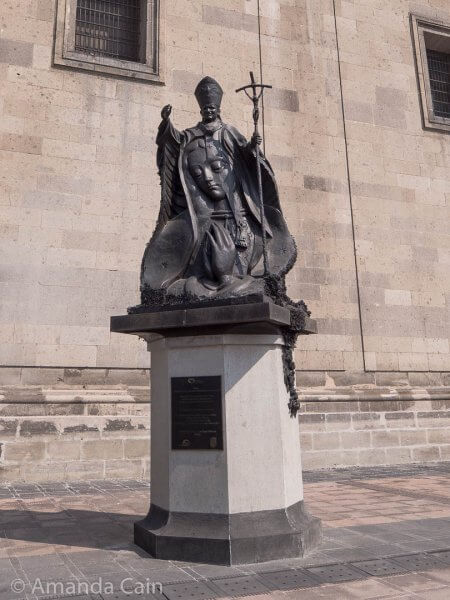
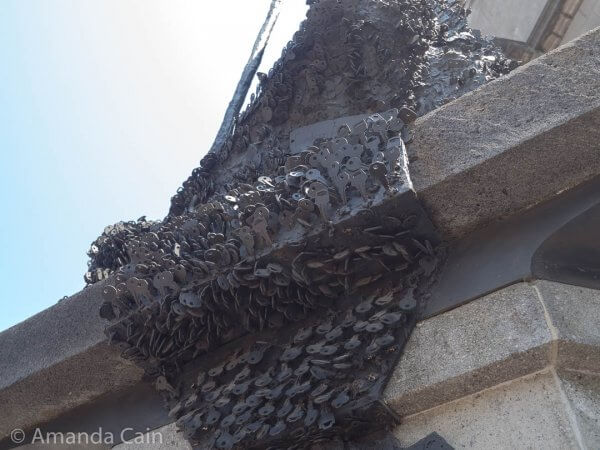
All over Mexico, people were asked to donate keys which were melted down to make the statue. With the keys representing the keys the hearts of the people. And you can still see a lot of the keys embedded in the statue.
Palacio Nacional
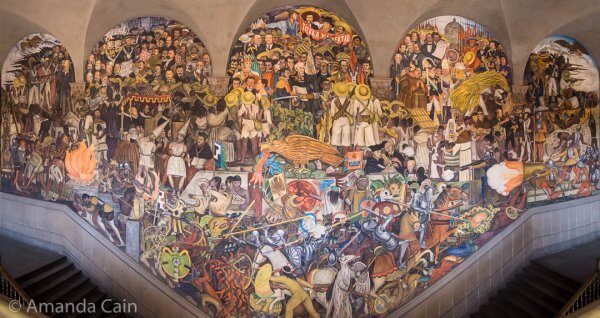
This building is the seat of government and the main reason to come here is to see the murals on Mexico’s history painted by Diego Rivera (this guy has paintings everywhere). The murals cover the different civilisations that existed in Mexico, as well as everything that happened after the Spanish arrived. It’s a pretty impressive set of murals.
Supreme Court
You can also go to the Supreme Court building next to the Palacio Nacional to see some more murals by other artists on the theme of ‘justice’. I use that term loosely because ‘miscarriages of justice’ seems to be a better description for a lot of them. One of the murals is particularly confronting. Which is an interesting way to motivate the people working for the Supreme Court. Unfortunately I don’t have any photos since you’re not allowed to bring in cameras.
Palacio Postal
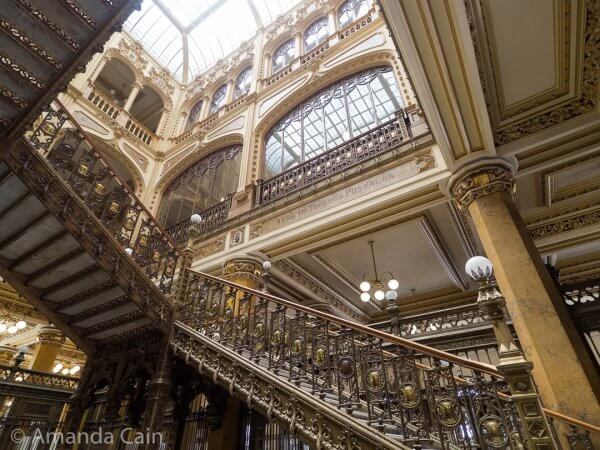
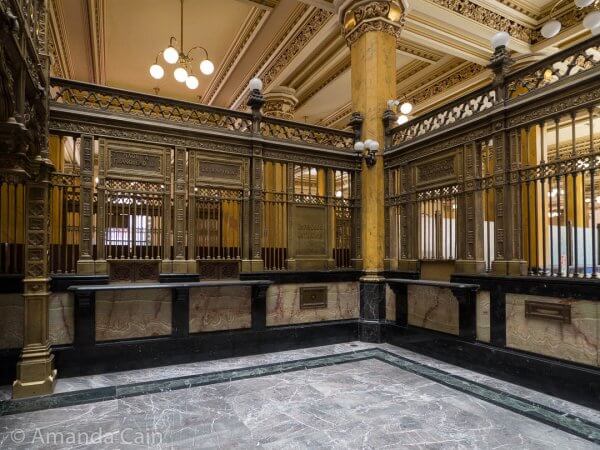
This building seems to be pretty for pretty’s sake. This is the main post office in Mexico City and they didn’t hold back when it came to decorating it.
Other Buildings
As you walk around the historic centre of Mexico City you’ll see plenty of other interesting buildings. One example is the House of Tiles (Casa de los Azujelos). where the owner wanted to show off how rich he was so he had the whole building covered in tiles.
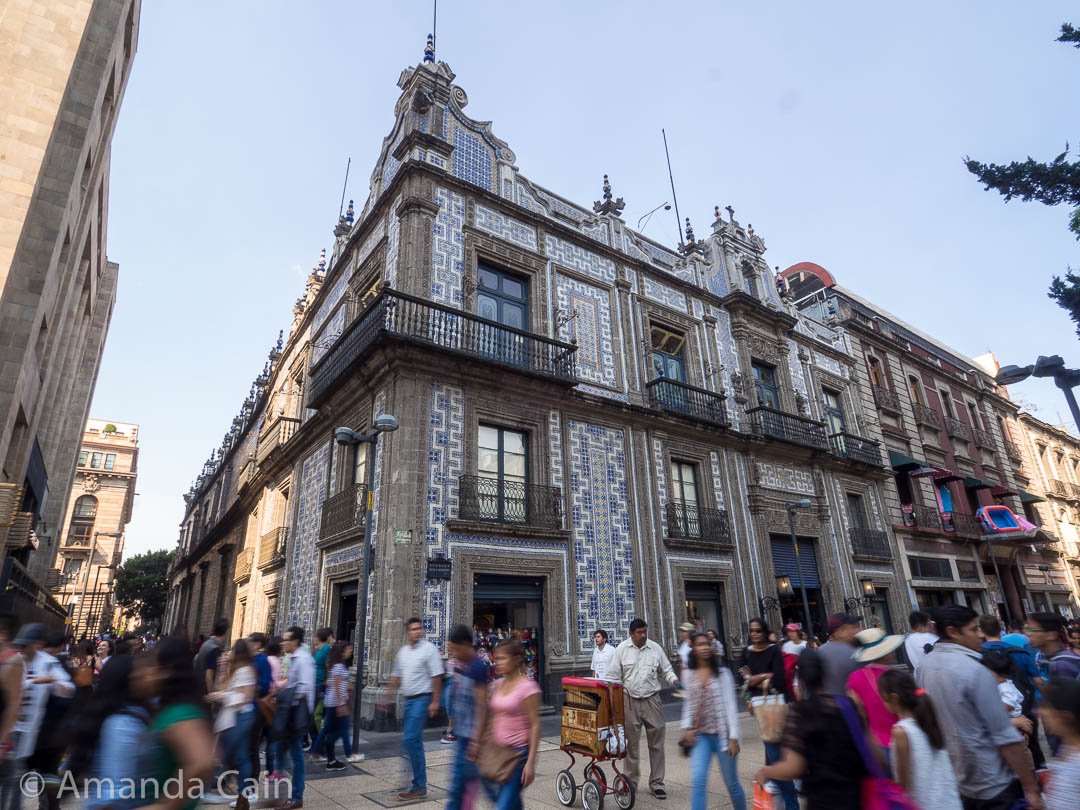
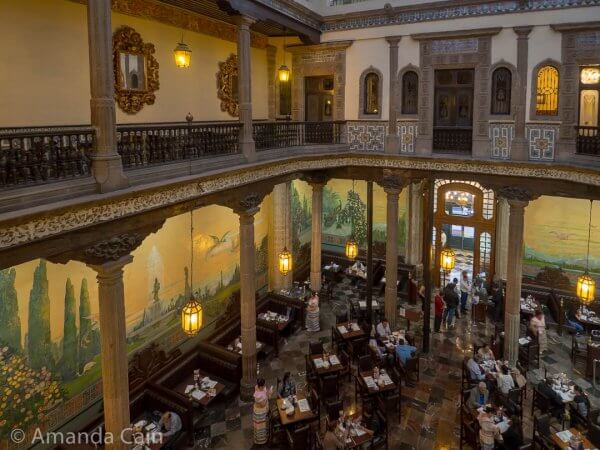
And it’s not just the outside, inside is just as fancy.
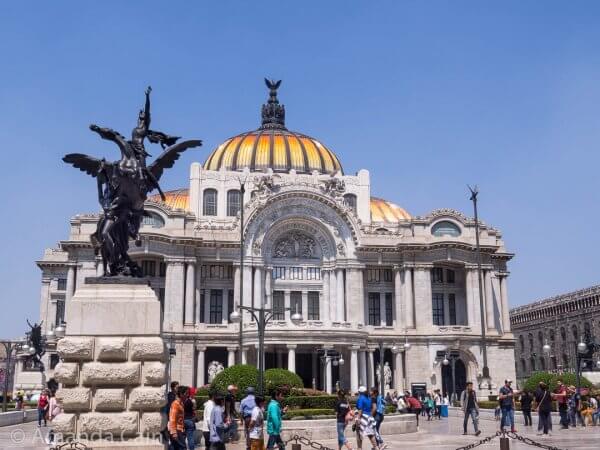
The Palacio de Bellas Artes is just across the road from the Palacio Postal and really stands out. (Seriously, you can’t accidently walk past it and miss it). But it wasn’t built on a solid foundation, so it’s starting to go a bit wonky too with all that heavy marble.
The remains of the Templo Mayor have been dug up and studied, and now you can walk around and see the different layers of temple foundations over the centuries. (I’ll be covering this one in more detail in a later post.)
Chapultepec Forest
It’s not much of a forest anymore, but it’s still a huge park with trees, grass and green space which makes it a nice change from the traffic and general craziness of Mexico City.
Anthropology Museum
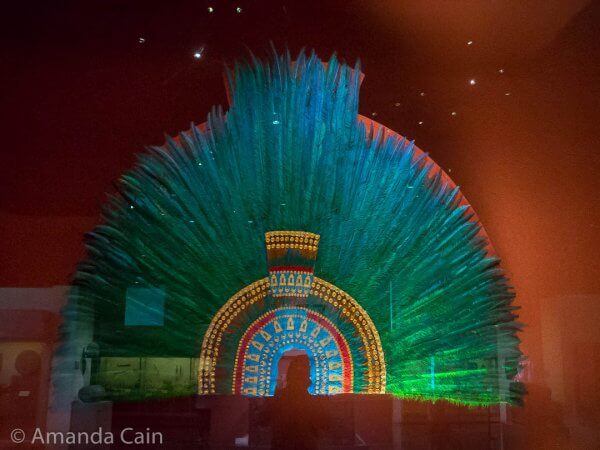
This is an excellent museum that covers all of Mexico’s pre-Hispanic civilisations. So you can see statues, masks, jewellery, carvings and even reconstructions of temples and tombs of the Mayas, Aztecs, Mexicas, Olmecs and plenty of others we had never heard of before.
Jardín del Agua
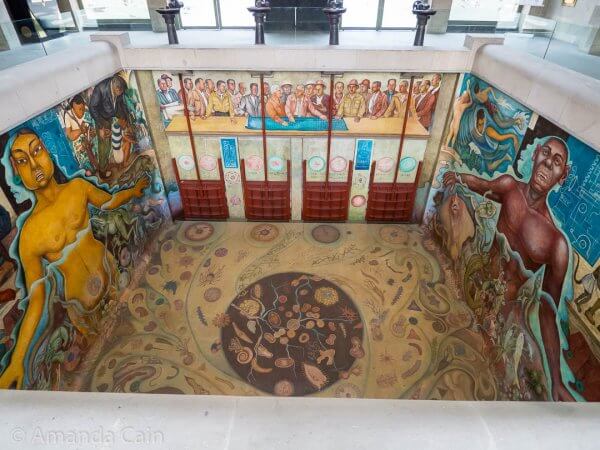
As a water treatment engineer this place was particularly interesting. This is where a big chunk of Mexico City’s water supply entered the city. The water came in through a distribution chamber where it could be diverted into four storage tanks. To honour the importance of water they decided to get Diego Rivera to decorate the chamber with murals.
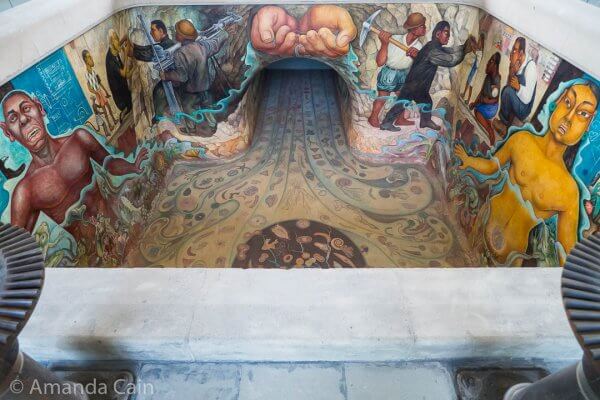
What was really surprising was that the chamber was put back into use once the murals were done. And continued this way for many decades before the water distribution network was changed. Unsurprisingly, all the murals that were below the water level disappeared. But using old photos they repainted all the murals so you can see them now as they would have looked originally. There’s also a water organ connected to the water pipes which plays the sounds of the incoming water flowing past.
Getting Between the Two Sections of Chapultepec
Chapultepec Forest is split into several sections, and getting between Section I & Section II on foot is not as easy as you would think. We probably spent 2 hr trying to get from the Jardín del Agua to the castle even though they’re only 1.5km apart. Why is this? Because there’s a big highway splitting these two sections of the park and it is not pedestrian friendly.
But what makes it really complicated is that the president has his official residence in the southern section of the park so you have all these soldiers and cops preventing you from taking certain routes but you don’t know they’re blocked until you’ve walked a long way first. By the time we made it to the castle we were too tired to stand in line in the sun so we didn’t get to see it in the end. We ended up going to the contemporary art gallery and looking at random piles of wood and glass, and lights that turned on and off. At least it was free and had air conditioning.
Xochimilco
This is the last bit of the lakes of Mexico City that still has water, and the “floating islands” or chinampas that were used by the Aztecs to grow food and support their city.
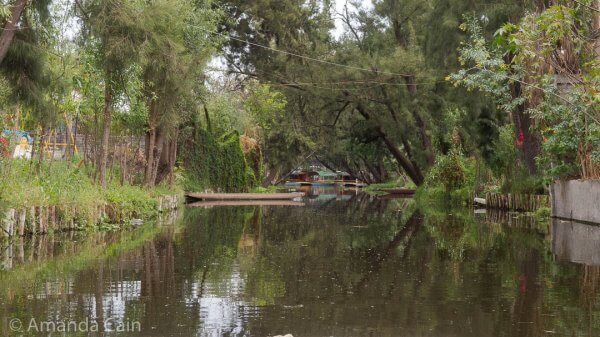
Depending on where you jump on a boat (there’s quite a few different embarcaderos in the area), or how much time you have available, you’ll either see the touristy side or the quiet natural side of the area.
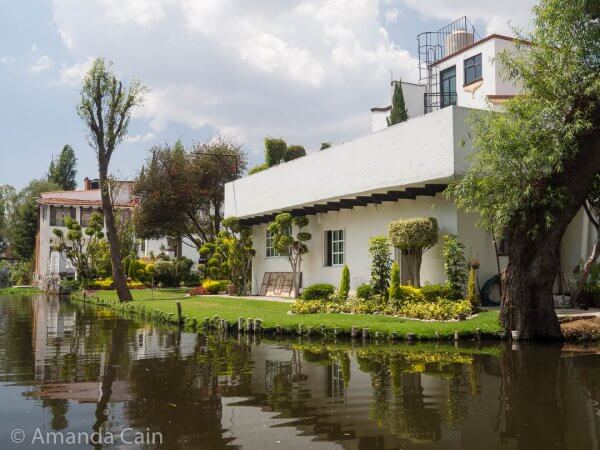
The main embarcadero is a short walk from Xochimilco light rail station, which is where we went. When you get there you’ll be ushered into a boat and given the hard sell on a boat trip. We went with a 2hr trip which takes you around the nearby area (which is fairly touristy).
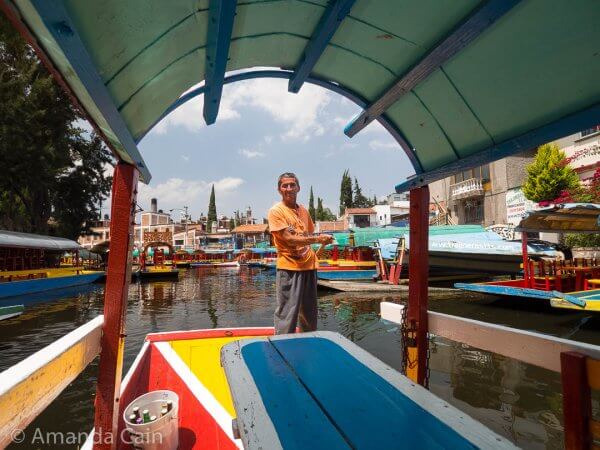
It’s not so bad if you’re after a day out on the water with Mariachi bands and food sellers coming up to your boat to make a sale.
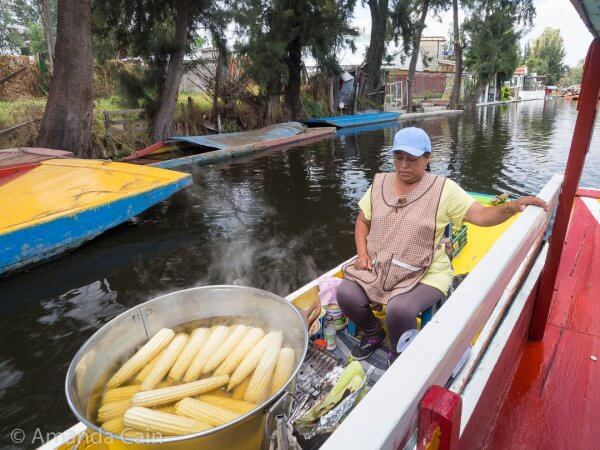
It’s pretty popular with locals so it’s a very lively place. If you’re trying to find the canals the way that they looked in the time of the Aztecs, you’ll need to go on a 4hr or longer trip to leave the touristy zone. Or jump on a boat from the Embarcadero del Parque Écologico.
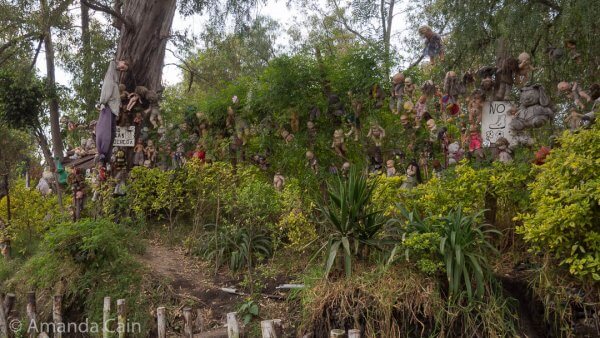
If you want to see something creepy, go to Isla de la Muñecas (Island of the Dolls). The legend says that a local man found a young girl drowned in a canal. So to try and soothe her spirit he hung dolls from the canals in the trees around the area where she died.
Other Places
Museo Soumaya
Mexico City’s most interesting buildings aren’t just the colonial ones. The Soumaya Museum is an ultra-modern building made of shiny silver hexagons.
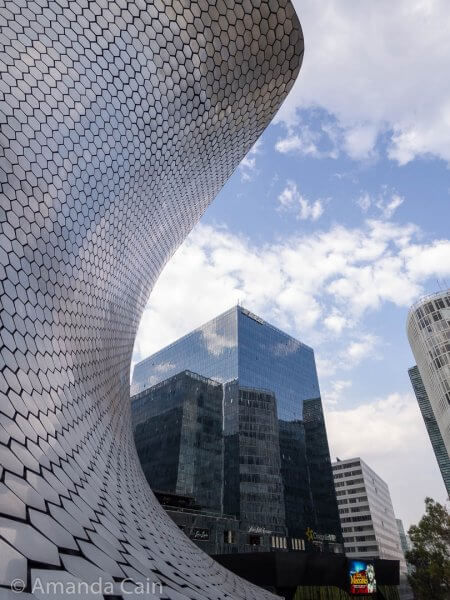
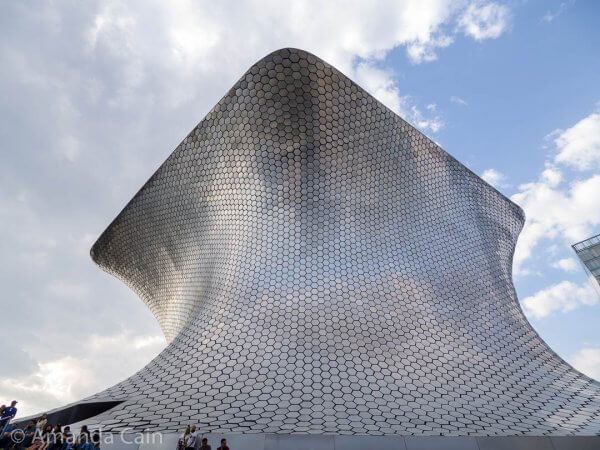
It was built by Carlos Slim, Mexico’s richest person and houses his extensive art collection which you can visit for free. (They say he owns half of Mexico and is planning on buying the other half.)
UNAM
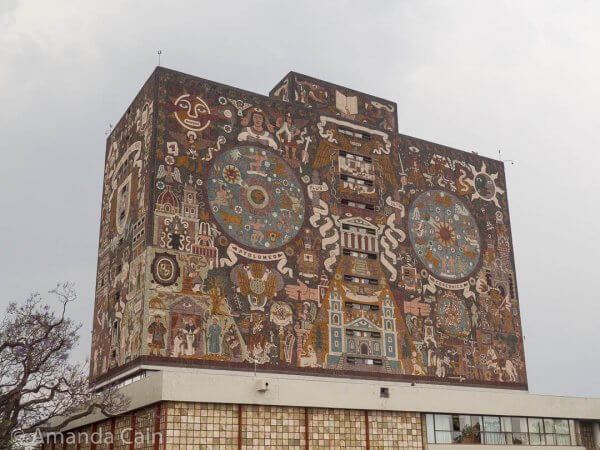
This is Mexico City’s university and the main attraction here is the library which has a giant mosaic covering it showing the history of culture in Mexico and the world. There are also some giant mosaic-sculptures by you guessed it: Diego Rivera.
Food Tours
One of the things you definitely need to do in Mexico City is go on a food tour. Because the city is so big there are tours of different neighbourhoods. I went on my own on a tour and then spent the next week taking Pedr along to most of the places so I could try them all again.
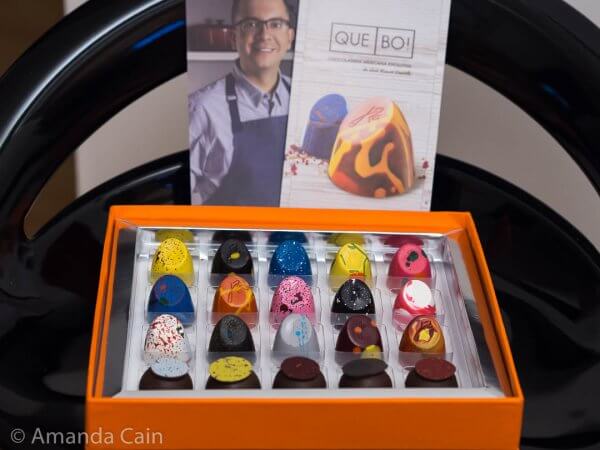
I also went to a cooking class, and managed to get over my fear of burning my fingers. So I was flipping tortillas in the pan using my hands. I did destroy the first half of the tortillas I tried to put in the pan, so that poor Chef Eduardo had to rescue them all for me. We did get to make his speciality of deep fried salsa, served over pork crackling in tortillas. Very tasty, definitely did not taste healthy.
The chefs in Mexico have to go through a pretty tough final exam to get qualified. They have to invent their own salsa and it can’t show any influences of existing Mexican cuisines or known recipes. It has to be completely original or they fail.
Lucha Libre (a.k.a. Mexican Wrestling)
To finish off, one attraction you should go see is Mexican wrestling. I’m not a wrestling expert, but Pedr says that the Mexican wrestlers pull off more impressive moves and stunts than most of the WWE wrestlers. So it was pretty cool to go see a show live and see them in action.
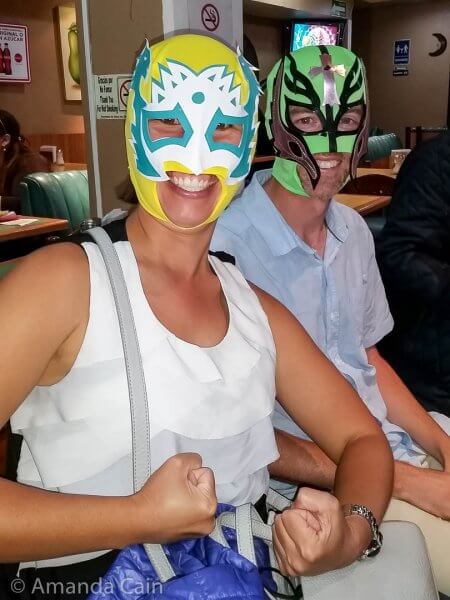
We went to an extra special match: mask vs mask. This is where they pit two well-known wrestlers (that have never lost a match) against each other and the loser has to take off his mask and reveal his identity. Not all Mexican wrestlers wear masks, if they don’t wear a mask then they grow their hair long. So when they lose they have to cut their hair instead. Unfortunately you can’t take cameras into the wrestling arena, so the only photos I have are from before the match at dinner.

Leave a Reply